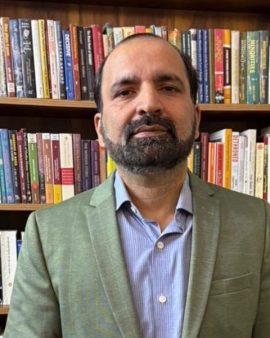
Prof. Brigadier Dr. Mukhtar Alam: A Life of Healing, Discipline, and Leadership
Prof. Brigadier Dr. Mukhtar Alam exemplifies a rare synthesis of medical excellence, military discipline, and compassionate leadership. As Chairman of the Department of Gynaecology at Ruby Hall Hospital, Pune, he has built a reputation not only as an outstanding clinician and academician, but also as a mentor and institution-builder whose work has touched thousands of lives across decades.
Trained in medicine at a time when resources were limited and expectations exacting, Dr. Mukhtar Alam’s journey has been shaped by rigor, resilience, and an unwavering commitment to service. His association with the Indian Armed Forces Medical Services instilled in him the values of discipline, precision, and duty—principles that would later define his approach to both medicine and leadership. Rising to the rank of Brigadier, he served with distinction, handling complex medical responsibilities under demanding conditions while upholding the highest standards of professional ethics.
Transitioning from military service to civilian healthcare, Dr. Alam carried forward the same sense of mission. At Ruby Hall Hospital, one of India’s most respected healthcare institutions, he has played a pivotal role in strengthening the Department of Gynaecology. Under his leadership, the department has grown into a centre known for clinical excellence, innovation, and patient-centric care. His work spans high-risk obstetrics, advanced gynaecological procedures, and the integration of modern technology with compassionate treatment.
What truly sets Prof. Brigadier Dr. Mukhtar Alam apart is his deep commitment to women’s health as a social responsibility, not merely a medical specialty. He believes that caring for women is foundational to building healthy families and communities. This belief has guided his emphasis on ethical practice, patient education, and dignity in care—particularly for women from disadvantaged backgrounds who often lack access to quality medical services.
As an academician, Dr. Alam has been a dedicated teacher and mentor to generations of medical students and young doctors. Known for his clarity, discipline, and approachability, he has inspired many to pursue excellence without losing empathy. His leadership style is firm yet nurturing—demanding high standards while encouraging continuous learning and moral responsibility. For him, producing competent doctors is as important as shaping humane professionals.
Beyond hospital walls, Prof. Brigadier Dr. Mukhtar Alam has been actively involved in professional bodies, medical conferences, and training programs, contributing to the advancement of gynaecological practice in India. His contributions reflect a lifelong belief that medicine must evolve through knowledge-sharing, research, and collaboration.
Despite his achievements and seniority, Dr. Alam is widely admired for his humility and simplicity. Colleagues describe him as calm under pressure, decisive in critical moments, and deeply respectful toward patients and staff alike. His leadership is not driven by authority alone, but by trust earned through consistency, competence, and character.
In an age where healthcare is increasingly challenged by commercialization and burnout, Prof. Brigadier Dr. Mukhtar Alam stands as a reminder of medicine’s noblest calling—to heal, to serve, and to lead with integrity. His life’s work reflects the enduring power of discipline guided by compassion, and expertise strengthened by purpose. For young doctors and healthcare leaders, his journey offers an enduring lesson: that true success in medicine lies not only in skill, but in service to humanity.