Muslim Mirror 100: The Most Influential Indian Muslims 2025

Community Leaders

Browse Lists by Year:


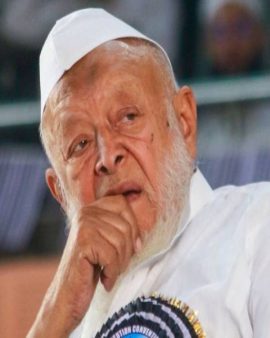
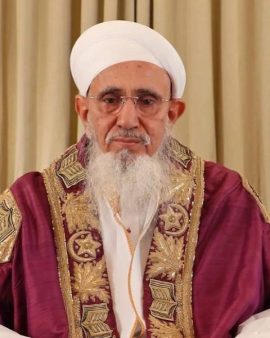
Arshad Madani - selected in the list of  - 2025

Arshad Madani

Arshad Madani: Islamic Scholar, Community Leader

Maulana Arshad Madani (1941-) a distinguished Islamic scholar and influential community leader, serves as the president of the Jamiat Ulama-i-Hind (JUH), one of India's oldest and most significant Islamic organizations. Born in Deoband, a town and a municipality in Saharanpur district of Uttar Pradesh, he belongs to a lineage deeply rooted in Islamic scholarship and has dedicated his life to the religious and social upliftment of Muslims in India.

Arshad Madani's education and early life were heavily influenced by his family's legacy of Islamic learning. He studied at the Darul Uloom Deoband, one of the most prestigious Islamic seminaries in the world, where he was deeply immersed in Islamic jurisprudence, theology, and philosophy. His profound knowledge and understanding of Islamic sciences earned him respect and recognition within the Muslim community.

As a leader of the Jamiat Ulama-i-Hind, Arshad Madani has played a crucial role in addressing the social, educational, and economic challenges faced by Muslims in India. He has been a vocal advocate for minority rights and has worked tirelessly to promote communal harmony and national integration. Under his leadership, JUH has been actively involved in various humanitarian and relief efforts, providing aid and support to communities affected by natural disasters and social unrest.

Madani is also known for his efforts in promoting education among Muslims. He has been instrumental in establishing and supporting numerous educational institutions, including madrasas and modern schools, aimed at providing quality education to Muslim youth. His vision for an educated and empowered Muslim community has been a driving force behind many initiatives that seek to bridge the gap between traditional and modern education.

A staunch advocate for justice and equality, Arshad Madani has often spoken out against policies and practices that he perceives as discriminatory towards Muslims. His outspoken stance on various socio-political issues has made him a prominent figure in national debates on minority rights and secularism.

Maulana Arshad Madani plays a pivotal role in delivering justice to those falsely implicated in terror cases by providing them with legal assistance. His efforts have led several Muslims securing justice in the court.

Maulana Arshad Madani's contributions to Islamic scholarship, community leadership, and advocacy for minority rights make him a pivotal figure in contemporary Indian society. His enduring dedication to education, social justice, and communal harmony stands as a testament to his impactful legacy.


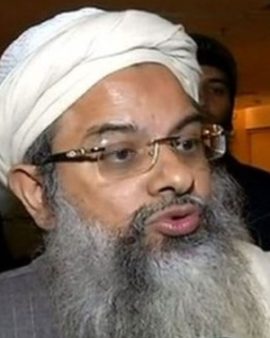
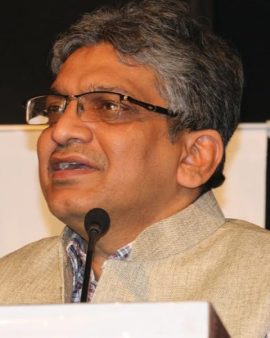
Mahmood Madani - selected in the list of  - 2025

Mahmood Madani

Maulana Mahmood Madani: A Leading Voice for Muslim Rights and National Harmony

Maulana Mahmood Madani is a prominent Indian Islamic scholar, politician social activist and head of of Jamiat Ulama-i-Hind (JUH-M) one of the oldest and most influential Islamic organizations in India. Born in 1964 in Deoband, Uttar Pradesh, into a family deeply rooted in Islamic scholarship, he is the grandson of Maulana Husain Ahmad Madani, a revered freedom fighter and theologian.

Mahmood Madani received his early Islamic education at Darul Uloom Deoband, one of the world’s leading Islamic seminaries. A dynamic leader, he has been at the forefront of advocating for Muslim rights, national unity, and communal harmony in India. Under his leadership, JUH has played a critical role in addressing socio-political challenges faced by the Indian Muslim community, including issues of education, economic upliftment, and safeguarding constitutional rights.

Madani is known for his firm stance against terrorism and his efforts to de-link Islam from acts of violence. He has repeatedly condemned extremism and worked to foster interfaith dialogue and mutual respect among religious communities. His advocacy for secularism and pluralism resonates in his speeches, emphasizing the importance of peaceful coexistence in a diverse nation like India.

A pragmatic leader, Mahmood Madani has also been active in legal battles to protect the rights and heritage of the Muslim community, including cases related to Waqf properties and masjids. He has initiated programs for skill development, education, and disaster relief, reflecting his commitment to social welfare.


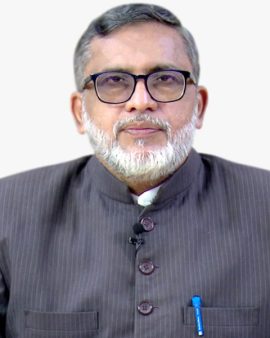
Malik Motasim Khan - selected in the list of  - 2025

Malik Motasim Khan

Malik Motasim Khan: A Life of Leadership, Learning, and Public Service

Mr. Malik Motasim Khan (1967-) born in Mudhole of present-day Nirmal district, Telangana, has emerged as a prominent figure in social leadership, and community development. Mudhole was earlier part of the undivided Adilabad district, which was later reorganized in 2016 into four districts—Adilabad, Komaram Bheem, Mancherial, and Nirmal—reflecting the region’s evolving administrative landscape.

With over two decades of experience in administration, leadership, people management, and community engagement, Mr. Khan’s journey has been shaped by a strong academic foundation and a deep commitment to public causes. He began his career as a school teacher in Telangana. His dedication to education was inspired in part by his father, Mr. Ashfaque Ali Khan, a respected and well-known teacher in the region. 

During his student years, he emerged as an active student leader and went on to serve the Students Islamic Organisation of India (SIO) in various capacities, from state leadership roles to National President for a two-year term.

His organizational journey continued with Jamaat-e-Islami Hind (JIH), where he served as Zonal President for Andhra Pradesh and Odisha from 2007 to 2011. From 2019 to 2023, he functioned as National Secretary of JIH’s Department of Community Affairs, before assuming the role of Vice President. He is also a member of JIH’s highest decision-making body, the Central Advisory Council, Convenor of the Central Political Committee, and a member of the Telangana State Wakf Board.

Actively involved in the Telangana movement, Mr. Khan played a significant role in mobilizing public support, including leading the historic ‘Telangana Garjana’ mass gathering in 2010. A compelling orator who reflected his enduring commitment to justice, education, and democratic participation.


Mehmood Pracha - selected in the list of  - 2025

Mehmood Pracha

Mehmood Pracha: The Defiant Lawyer

Mehmood Pracha is a prominent Indian lawyer known for his fearless advocacy, unwavering commitment to civil liberties, and consistent defense of constitutional values. Widely described as “The Defiant Lawyer,” Pracha has carved a distinct space for himself in India’s legal landscape by representing victims of communal violence, wrongful arrests, and state excesses—often in cases that others hesitate to take up.

Based in Delhi, Mehmood Pracha practices primarily in criminal law and human rights litigation. Over the years, he has represented numerous individuals accused under stringent laws, including terror-related and national security statutes, ensuring that due process, fair trial, and legal safeguards are upheld. His work reflects a deep belief that the strength of a democracy lies in its ability to protect the rights of its most vulnerable citizens, even in times of political pressure and public hostility.

Pracha gained national attention for his legal interventions in cases related to communal riots, mob violence, and custodial abuse. He has consistently challenged arbitrary arrests, coerced confessions, and investigative lapses, often taking on powerful institutions in court. His legal strategy combines rigorous constitutional reasoning with meticulous attention to facts, making him a formidable presence in the courtroom.

Beyond litigation, Mehmood Pracha is also known for his outspoken public stance on rule of law, minority rights, and judicial accountability. He frequently participates in legal awareness programs and public discussions, emphasizing the importance of constitutional morality and equal justice before law. His forthright approach has earned him admiration from civil rights groups as well as criticism from political quarters—yet he remains undeterred.

Despite facing personal risks, professional challenges, and intense scrutiny, Mehmood Pracha continues to stand firm in his mission. His career exemplifies legal courage rooted in principle rather than convenience. As “The Defiant Lawyer,” he symbolizes resistance through law—using the Constitution not merely as a document, but as a living shield for justice, dignity, and democratic rights.


Mufaddal Saifuddin - selected in the list of  - 2025

Mufaddal Saifuddin

Mufaddal Saifuddin

Syedna Dr. Mufaddal Saifuddin (born in 1946) is the 53rd Da'i al-Mutlaq of the Dawoodi Bohra community, a prominent sect within the Shia Ismaili branch of Islam. Born on March 16, 1946, in Surat, Gujarat, India, he is the son of Syedna Mohammed Burhanuddin, the 52nd Da'i al-Mutlaq, and succeeded his father in 2014. His leadership is marked by a commitment to the spiritual and social welfare of his community.

Syedna Mufaddal Saifuddin received his early religious education in the traditional centers of learning associated with the Dawoodi Bohra community. He furthered his studies in the fields of Islamic theology and jurisprudence at Al-Jamea tus Saifiyah in Surat, an institution dedicated to the education of Bohra scholars. His academic background is complemented by a medical degree from the University of Bombay, reflecting his diverse expertise and commitment to holistic education.

Under Syedna Mufaddal Saifuddin’s leadership, the Dawoodi Bohra community has seen significant development in various areas, including education, healthcare, and social welfare. He has been instrumental in the establishment of numerous educational institutions, hospitals, and social service programs aimed at improving the quality of life for his followers. His efforts in promoting modern education while preserving traditional values have been particularly noteworthy. 

He is the Chancellor of Aligarh Muslim  University and Jamia Millia Islamia.

Syedna Mufaddal Saifuddin is also known for his emphasis on unity, community service, and ethical conduct. He has led numerous initiatives to address social issues and promote harmony within and beyond the Dawoodi Bohra community. His leadership style combines a deep spiritual insight with practical approaches to contemporary challenges, earning him widespread respect and admiration.

His tenure as Da'i al-Mutlaq has been characterized by a focus on strengthening the community’s spiritual and social fabric, reflecting his dedication to guiding his followers through both religious and worldly matters. Syedna Dr. Mufaddal Saifuddin continues to be a central figure in the Dawoodi Bohra community, leading with vision and compassion.


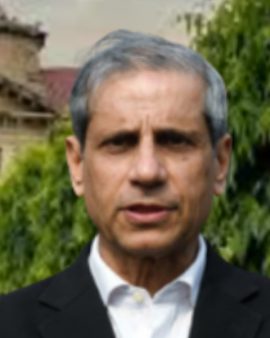
Navaid Hamid - selected in the list of  - 2025

Navaid Hamid

Navaid Hamid: Advocacy, Institution-Building, and the Pursuit of Democratic Engagement

Navaid Hamid has long been a familiar name in India’s civil society and minority advocacy circles, known for his role as the former President of the All India Muslim Majlis-e-Mushawarat (AIMMM). A thoughtful organizer rather than a headline-driven figure, Hamid’s public life has been shaped by sustained engagement with issues of constitutional rights, social justice, and democratic participation.

AIMMM, founded in the 1960s as an umbrella platform for Muslim organizations and scholars, has historically sought to articulate community concerns within the framework of India’s Constitution. Navaid Hamid’s association with the organization evolved over years of involvement in dialogue, coordination, and public advocacy. When he assumed the presidency, he inherited both a legacy of principled engagement and the challenge of navigating an increasingly polarized political climate.

As president, Hamid emphasized institutional relevance over reactive politics. He sought to reposition AIMMM as a forum for consultation, research-based advocacy, and legal-constitutional engagement rather than street-level mobilization alone. His leadership style reflected a belief that minority voices are most effective when they are organized, informed, and articulated through democratic mechanisms.

One of the defining features of Navaid Hamid’s tenure was his consistent emphasis on constitutionalism. Whether addressing questions of civil liberties, discrimination, or communal harmony, he repeatedly framed arguments in the language of fundamental rights, rule of law, and democratic accountability. This approach helped AIMMM maintain credibility among civil society actors, legal professionals, and rights-based organizations beyond the Muslim community.

Hamid was also attentive to the internal diversity of Muslim society in India. Under his leadership, AIMMM attempted to broaden conversations to include issues of education, socio-economic marginalization, and representation, recognizing that religious identity intersects with class, region, and gender. While progress was incremental, his efforts reflected a desire to move beyond symbolic politics toward more substantive engagement.

Publicly, Navaid Hamid is known for his measured tone. He avoids inflammatory rhetoric, preferring deliberation and dialogue—even with ideological opponents. This restraint has drawn both appreciation and criticism. Supporters see it as strategic maturity in a volatile environment; critics argue that such an approach risks being overshadowed by more aggressive narratives. Hamid, however, has consistently maintained that long-term democratic gains are built through persistence rather than provocation.

Beyond AIMMM, Hamid has been active in broader civil society discussions, engaging with journalists, academics, and rights groups on questions of pluralism and social cohesion. His interventions tend to be issue-driven rather than personality-centered, reinforcing his belief that movements must outlast individuals.

Since stepping down as president, Navaid Hamid has continued to be regarded as an experienced voice in minority affairs—someone who understands both the limitations and possibilities of institutional advocacy in India’s democratic framework. His career underscores the often-unseen labor of coordination, negotiation, and principled dissent that sustains civil society spaces.

In an era marked by sharp polarization and shrinking room for dialogue, Navaid Hamid’s public life reflects a quieter tradition of leadership—one grounded in institutions, constitutional faith, and the conviction that democratic engagement, though slow and imperfect, remains the most enduring path toward justice and inclusion.


Pirzada Md Abbas Siddiqui - selected in the list of  - 2025

Pirzada Md Abbas Siddiqui

Pirzada Md. Abbas Siddiqui: Cleric-Turned Politician from Furfura Sharif

Pirzada Md. Abbas Siddiqui (born 1987) is an Indian Islamic scholar, social activist, and politician from West Bengal, best known as the founder of the Indian Secular Front (ISF), a political party launched in 2021. He is a cleric of Furfura Sharif, a prominent Islamic spiritual centre in Hooghly district, and belongs to the influential Siddiqui family, which has historically been the custodian of the Furfura Sharif shrine.

Abbas Siddiqui was born to Pirzada Ali Akbar Siddiqui and is the great-grandson of Mohammad Abu Bakr Siddique, the founder of the Silsila-e-Furfura (Furfura Sharif order). The shrine has long played a significant role in shaping the religious and social life of Muslims in Bengal. He is also the nephew of Toha Siddiqui, another well-known cleric associated with the institution. Abbas Siddiqui received his religious education in Islamic theology at Furfura Fatehia Senior Madrasah, grounding him firmly in traditional scholarship.

Entering public life as a social and religious figure, Siddiqui gradually emerged as a vocal advocate for Muslim representation and social justice. On 21 January 2021, he formally launched the Indian Secular Front, positioning it as a platform for marginalized communities, particularly Muslims, Dalits, and backward classes. Initially, the party explored an alliance with AIMIM, led by Asaduddin Owaisi, but the arrangement did not materialize. Subsequently, ISF joined hands with the Left Front and the Indian National Congress to form the Sanjukta Morcha for the 2021 West Bengal Assembly elections. Due to technical constraints, ISF candidates contested on a borrowed election symbol from the Rashtriya Secular Majlis Party.

Siddiqui has also courted controversy over certain remarks made in 2021 regarding religious offences, which drew widespread criticism across political and civil society circles. Despite this, he remains a prominent and polarising figure in West Bengal politics, reflecting the intersection of faith, identity, and democratic participation.


Qasim Rasool Ilyas - selected in the list of  - 2025

Qasim Rasool Ilyas

Syed Qasim Rasool Ilyas: Activist, Community leader

Dr.Syed Qasim Rasool Ilyas is the official spokesperson of the All India Muslim Personal Law Board (AIMPLB), a leading umbrella organization advocating for the protection and promotion of Muslim personal laws and religious freedoms in India. Known for his articulate communication skills and deep understanding of socio-political issues, he has emerged as a prominent voice for the Muslim community in the country.

Born in 1955 in a family with a strong intellectual and socio-religious background, Syed Qasim Rasool Ilyas pursued his education in science and journalism. He is widely regarded for his nuanced perspectives on contemporary challenges facing Indian Muslims. Over the years, he has been an active participant in various initiatives to safeguard the constitutional rights of minorities, emphasizing the importance of unity, dialogue, and democratic engagement.

As the spokesperson of AIMPLB, Syed Qasim Rasool Ilyas has played a critical role in presenting the Board’s stance on pivotal issues such as the triple talaq legislation, the Uniform Civil Code, and masjid-mandir disputes. His ability to articulate the Muslim community’s concerns and aspirations on national platforms has earned him respect across ideological spectrums.

Beyond his role in AIMPLB, he has been actively involved in various socio-political and educational initiatives. He is a founding member of the Welfare Party of India and has consistently advocated for justice, equality, and communal harmony.

Syed Qasim Rasool Ilyas combines his deep-rooted Islamic scholarship with a pragmatic approach to addressing modern challenges. His balanced and well-reasoned views make him a key figure in fostering understanding between communities while advocating for the rights and dignity of the Muslim populace in India.


Sadatullah Husaini - selected in the list of  - 2025

Sadatullah Husaini

Syed Sadatullah Husaini: Islamic Scholar/ Community Leader

Syed Sadatullah Husaini (born in 1973) is a prominent Indian leader serving as the President (Amir) of Jamaat-e-Islami Hind (JIH) and Vice President of the All India Muslim Personal Law Board (AIMPLB). Formerly, he led the Students' Islamic Organisation of India (SIO) as National President for two consecutive terms (1999–2003) and directed JIH’s Study and Research Department. He regularly contributes columns to major publications, addressing socio-political and contemporary issues.

Husaini graduated in electronics and telecommunication engineering from Nanded, Maharashtra. As a student, he was deeply involved with SIO and later became the youngest member of JIH’s Central Advisory Council (Markazi Majlis-e-Shura). Over the years, he has participated in various social and academic organizations across India.

Husaini critiques modern globalization for perpetuating economic and cultural inequality, advocating instead for Islam’s emphasis on universal brotherhood. On feminism, he highlights shortcomings in both traditional Muslim societies and the West, urging a balanced approach that preserves women's dignity and rights as prescribed by Islam.

In Indian Muslim politics, Husaini calls for constructive dialogue with the majority community, promoting nation-building while rejecting divisive narratives. His critique of postmodernism centers on its contradictions, asserting that Islam provides a balanced framework of absolute divine truths and relative human understanding.

Husaini has also voiced concerns over the Right to Education Act (RTE), arguing that it undermines the constitutional rights of minorities, particularly affecting their ability to manage religious educational institutions.

Through his intellectual contributions and leadership, Husaini plays a vital role in fostering social harmony and addressing contemporary challenges while upholding Islamic values.


Umair Ahmed Ilyasi - selected in the list of  - 2025

Umair Ahmed Ilyasi

Umair Ilyasi: Bridging Faith, Community, and Public Dialogue

Umair Ilyasi occupies a distinctive space in India’s religious and public life—one that blends spiritual leadership with civic engagement. As the Chief Imam of the All India Imam Organization (AIIO), he has emerged as a recognizable Muslim voice advocating dialogue, social harmony, and constructive engagement between religious communities and the state. His work reflects an effort to position religious leadership not in isolation, but within the broader framework of India’s plural and constitutional society.

Born into a family with a strong religious tradition, Umair Ilyasi was exposed early to Islamic scholarship and community leadership. His upbringing emphasized faith alongside responsibility, shaping a worldview in which religious practice is closely linked to social conduct and public ethics. Over time, he developed an approach that seeks to balance traditional religious values with the realities of a rapidly changing, diverse nation.

As head of the All India Imam Organization, Ilyasi represents thousands of mosque imams across the country, particularly those serving at the grassroots level. One of his central concerns has been the social and economic conditions of imams, many of whom work with limited resources and recognition. Through advocacy and engagement with government institutions, he has raised issues related to welfare, dignity, and institutional support for religious functionaries, arguing that community leaders must themselves be empowered to serve effectively.

Umair Ilyasi has often emphasized the role of imams not merely as prayer leaders, but as social guides and moral counselors. In his public statements, he has encouraged religious leaders to address issues such as education, health, women’s dignity, addiction, and social responsibility from the pulpit. This expanded vision of religious leadership reflects his belief that faith must engage with everyday challenges rather than remain confined to ritual.

At the national level, Ilyasi is known for his engagement with interfaith dialogue and public institutions. He has participated in conversations aimed at reducing mistrust between communities and fostering mutual respect. Supporters view this engagement as a pragmatic effort to ensure Muslim concerns are heard within mainstream discourse. Critics, meanwhile, have questioned aspects of his approach, reflecting the broader debates within the community about representation and strategy. Ilyasi has responded by maintaining that dialogue, however imperfect, is preferable to disengagement and silence.

Media visibility has played a role in shaping his public image. Unlike many traditional religious leaders, Umair Ilyasi is comfortable navigating television debates, public forums, and digital platforms. His communication style is generally measured and accessible, designed to reach audiences beyond strictly religious circles. This visibility has made him a familiar figure, but it has also placed him under constant scrutiny—a challenge he appears willing to accept as part of public leadership.

Those who work with him describe Ilyasi as organized, persistent, and focused on institution-building rather than individual prominence. He often stresses that religious leadership must evolve with time while remaining anchored in ethical principles. Faith, for him, is not a barrier to citizenship but a moral resource that can strengthen it.

In a polarized environment where religious voices are often framed in extremes, Umair Ilyasi represents a middle path—seeking engagement over isolation and reform over rhetoric. Whether one agrees with his methods or not, his role underscores an important reality of modern India: that religious leadership continues to matter, especially when it strives to speak not just to its own community, but to the nation at large.


Yusuf Mohamed Abrahani - selected in the list of  - 2025

Yusuf Mohamed Abrahani

Advocate Yusuf Mohamed Abrahani: A Veteran Public Servant and Legal Luminary

Advocate Yusuf Mohamed Abrahani is a seasoned public figure whose career spans law, legislative service, and civic leadership. Known for his deep commitment to public welfare and minority empowerment, he has earned wide respect as a lawyer, politician, and community leader in Maharashtra.

A distinguished Advocate of the Bombay High Court, Yusuf Mohamed Abrahani has built a strong legal practice grounded in constitutional values, social justice, and the rule of law. His legal acumen and understanding of public policy have enabled him to effectively represent citizens while also contributing meaningfully to debates on governance and rights. Over the years, his courtroom experience has complemented his role as a public representative, allowing him to bridge the gap between law and legislative action.

Adv. Abrahani has served as a Member of the Legislative Assembly (MLA), where he raised issues related to urban development, housing, civic amenities, and minority welfare. His tenure as an elected legislator was marked by a people-centric approach and a consistent effort to ensure that marginalized voices were heard in policy-making forums. In addition, he has been elected twice as a Municipal Corporator, reflecting the enduring trust and confidence reposed in him by the electorate at the grassroots level.

His administrative experience extends to his role as Chairman of MHADA (Maharashtra Housing and Area Development Authority), where he contributed to initiatives aimed at improving housing infrastructure and addressing the needs of economically weaker sections. This role further strengthened his reputation as an administrator capable of handling complex urban and housing challenges.

Beyond law and politics, Advocate Abrahani currently serves as the President of Islam Gymkhana, a premier socio-cultural institution. In this capacity, he has worked to promote educational, cultural, and social initiatives, fostering community cohesion and dialogue.

With a career defined by integrity, service, and leadership, Advocate Yusuf Mohamed Abrahani continues to play a significant role in public life, combining legal expertise with a steadfast commitment to social progress and inclusive development.


Muslim Mirror 100: The Most Influential Indian Muslims 2025

Copyright © 2024 | All rights reserved. | Website Designed & Maintained by Aash App Developers