Muslim Mirror 100: The Most Influential Indian Muslims 2025

Academicians

Browse Lists by Year:


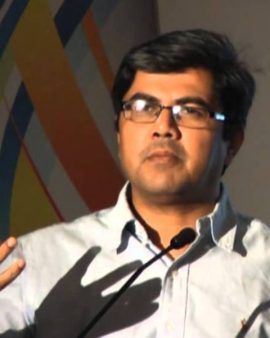
Amir Ullah Khan - selected in the list of  - 2025

Amir Ullah Khan

Amir Ullah Khan: Shaping Policy with Knowledge, Purpose, and Compassion

Amir Ullah Khan is an economist, academic, and public policy thinker whose career reflects a deep commitment to inclusive development and social transformation. Working at the intersection of economics, governance, and human welfare, Prof. Khan has devoted decades to addressing some of India’s most pressing challenges—healthcare access, educational equity, agricultural sustainability, and institutional reform.

His journey spans some of the most influential policy and academic spaces in India and abroad. Prof. Khan has worked with the Ministry of Finance, Government of India, and the United Nations Development Programme, contributing to reforms aimed at preparing India for a globalized economy. As Deputy Director and Policy Advisor to the Bill & Melinda Gates Foundation, he helped shape development strategies grounded in evidence, equity, and long-term impact.

Equally passionate about education, Prof. Khan has inspired generations of students as a Visiting Professor at the Indian School of Business and NALSAR University of Law, and as guest faculty at NMIMS Hyderabad. He has held transformative leadership roles, including Founder–Vice Chancellor of Glocal University, and has taught at premier institutions such as IIFT Delhi, Manipal Institute of Technology, and FORE School of Management. His global engagement includes serving as Adjunct Professor at Edith Cowan University and delivering lectures at institutions such as Harvard University and the US–India Policy Institute in Washington, DC.

A widely respected public intellectual, Prof. Khan writes influential columns for livemint and Etemaad Daily, translating complex economic debates into insights that empower citizens and policymakers alike. He also edits SAGE’s Journal of Development Policy and Practice, nurturing rigorous and ethical scholarship.

Beyond classrooms and conferences, Prof. Khan serves on the boards of leading educational and social institutions and is the Founder Trustee of the E&H Foundation, dedicated to expanding quality education and healthcare for underserved communities, particularly in Uttar Pradesh. Through Policy Talks, he brings public policy education to young minds, affirming his belief that informed citizens are the foundation of a just and prosperous society.

Amir Ullah Khan’s life exemplifies how knowledge, when guided by purpose and compassion, can become a powerful force for lasting change.


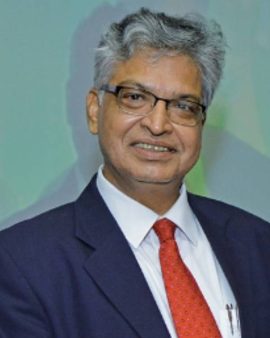
Furqan Qamar - selected in the list of  - 2025

Furqan Qamar

Professor Furqan Qamar – Renowned Academic Leader and Former Vice-Chancellor

Professor Furqan Qamar is a distinguished academic and administrator, known for his significant contributions to higher education in India. He has served as the Vice-Chancellor of both the University of Rajasthan and the Central University of Himachal Pradesh, becoming the first to hold the latter position. His leadership in higher education has also extended to his role as the Secretary General of the Association of Indian Universities (AIU), the largest and one of the oldest networks of universities in India.

With a rich academic background and leadership experience, Professor Qamar has been instrumental in shaping policies related to public education and university governance. He has served as the Advisor (Education) to the Planning Commission of India, contributing to the formulation of educational policies and strategic planning for India’s higher education sector. His career also includes significant roles as an academic leader and administrator at various prestigious institutions, including Jamia Millia Islamia.

A Professor of Management, Professor Qamar holds a Ph.D. from the University of Lucknow, with his dissertation focused on Financial Management in Residential Universities of Uttar Pradesh (1989). He completed his M.Com in 1981 and B.Com in 1979, both from the University of Lucknow, securing the first position in each.

Professor Qamar’s academic interests lie in public policy, planning, administration, and financing of higher education, and he has published over 35 research papers and numerous articles in reputed national journals and newspapers. He has also contributed to several committees and working groups at national and international levels, further demonstrating his commitment to improving educational standards globally.

Throughout his career, Professor Qamar has held several important administrative posts, including Coordinator of the Jamia Medical College Project and Director of the Centre for Management Studies at Jamia Millia Islamia. His contributions to educational administration were recognized with prestigious awards such as the D.Lit. (honoris causa) from Swami Vivekananda Subharti University, the Rajrishi Purushottam Das Tandon Shiksha Samman, and the Lifetime Achievement Award from the Punjab Commerce and Management Association.

In addition to his academic and administrative roles, Professor Qamar has played an essential part in promoting educational reforms and advancing management education in India. His legacy continues to inspire future leaders in higher education.


Khalil ur Rahman Sajjad Nomani - selected in the list of  - 2025

Khalil ur Rahman Sajjad Nomani

Maulana Khalil-ur-Rahman Sajjad Nomani (born 1955) is a prominent Indian Islamic scholar, author, orator, and public intellectual known for his unwavering commitment to Islamic scholarship, education, interfaith harmony, and social justice. Born in Lucknow, Uttar Pradesh, into a distinguished scholarly family, he is the son of the late Maulana Manzoor Nomani, a towering figure in 20th-century Islamic thought. This deep-rooted legacy has profoundly shaped his life and mission.

Maulana Sajjad Nomani began his formal Islamic education at Nadwatul Ulama, one of India’s most prestigious Islamic seminaries. There, he was nurtured under the guidance of several renowned scholars. He continued his advanced studies at Darul Uloom Deoband, further solidifying his expertise in Islamic jurisprudence (fiqh), Quranic studies, and Hadith. He later traveled to the Islamic University of Madinah in Saudi Arabia, where he broadened his academic horizons and engaged with the global Islamic scholarly tradition.

His scholarship is notable for blending traditional Islamic sciences with a nuanced understanding of contemporary challenges, which enables him to address the modern Muslim experience with relevance and intellectual rigor.

Maulana Sajjad Nomani is widely respected for his efforts in promoting Islamic unity, education, and civil rights. He serves as an official spokesperson for the All India Muslim Personal Law Board (AIMPLB), playing a key role in defending and articulating the constitutional and religious rights of Muslims in India. His advocacy often centers on preserving the integrity of Muslim personal laws, religious freedom, and the broader Islamic identity in a rapidly changing socio-political landscape.

He is the author of several acclaimed books and numerous scholarly articles, covering a wide range of subjects such as jurisprudence, spirituality, Islamic history, interfaith relations, and socio-political reform. His writings are recognized for their intellectual clarity, depth, and accessibility to both academic and general audiences.

Beyond his scholarly pursuits, Maulana Sajjad Nomani is a strong advocate of interfaith dialogue and comparative religious studies. He believes in building bridges of understanding among diverse religious communities and has consistently worked toward fostering peaceful coexistence.

He is especially known for championing Dalit-Muslim unity, addressing issues of marginalization and caste-based discrimination. His outreach efforts have brought together Muslim, Sikh, and Christian communities on platforms aimed at social justice and communal harmony. He is frequently invited to speak at interfaith forums, national conferences, and peace initiatives, where his voice resonates as one of reason, compassion, and unity.

Committed to nurturing future generations, Maulana Sajjad Nomani regularly delivers lectures and conducts workshops across India and abroad. He focuses on youth empowerment, urging young Muslims to remain grounded in Islamic values while being intellectually engaged with the world around them. His lectures often address modern challenges such as secularism, identity crises, Islamophobia, and globalization from a deeply rooted Islamic perspective.

Through his tireless efforts and visionary leadership, Maulana Sajjad Nomani has become a guiding force in contemporary Islamic thought. His work continues to inspire Muslims globally to embrace their faith with confidence, wisdom, and a sense of responsibility toward society at large.


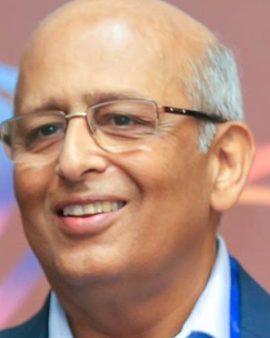
Shahid Jameel - selected in the list of  - 2025

Shahid Jameel

Dr. Shahid Jameel: At the Forefront of Science, Innovation, and Public Health

Dr. Shahid Jameel stands as one of India’s most distinguished scientists, renowned for his contributions to virology, public health, and biomedical research. With a career spanning decades of groundbreaking work, he has earned recognition not only for scientific excellence but also for his efforts to bridge the gap between research, policy, and society. For Dr. Jameel, science is not confined to laboratories—it is a tool for improving lives and shaping national health priorities.

Born and raised in India, Dr. Jameel showed an early curiosity about the natural world, a trait that led him to pursue studies in medicine and molecular biology. He later specialized in virology, a field that would define his career, combining meticulous laboratory research with a commitment to addressing pressing public health challenges. His academic rigor and analytical approach quickly established him as a leading voice in biomedical science.

Dr. Jameel’s research focuses on viruses that impact human health, particularly hepatitis and HIV, as well as emerging infectious diseases. His work on understanding viral mechanisms, transmission, and treatment strategies has had significant implications for both national and global health. Over the years, he has published extensively in high-impact scientific journals, contributing knowledge that guides policy decisions and informs public health interventions.

Beyond his laboratory achievements, Dr. Jameel has been a tireless advocate for building robust scientific institutions in India. As a leader of premier research organizations, he has championed interdisciplinary collaboration, mentorship of young scientists, and the creation of research infrastructure that meets global standards. His leadership style is marked by inclusivity, intellectual rigor, and the belief that the next generation of scientists must be equipped not only with technical expertise but also with a sense of responsibility toward society.

During public health crises, Dr. Jameel has been a prominent voice in translating complex scientific findings for policymakers, media, and the general public. He believes that effective science communication is essential for informed decision-making, particularly in a world increasingly shaped by epidemiological threats. His ability to articulate research in accessible terms has made him a trusted advisor in both governmental and academic circles.

Colleagues describe Dr. Jameel as methodical, disciplined, and deeply committed to ethical research practices. He has consistently emphasized the importance of evidence-based science in shaping health interventions, resisting shortcuts or sensationalism. At the same time, he fosters creativity and innovation, encouraging his teams to explore bold hypotheses while adhering to rigorous standards.

Beyond his professional accomplishments, Dr. Jameel is also known for his mentorship and engagement with the broader community of scientists. He actively supports programs to nurture young talent, promote scientific literacy, and inspire students—especially from underrepresented communities—to pursue careers in research. For him, science is as much about creating knowledge as it is about cultivating curiosity and opportunity.

Dr. Shahid Jameel’s career is a testament to the power of discipline, vision, and societal commitment in science. In an era when biomedical research is critical to global health security, he exemplifies the scientist as a public servant, mentor, and innovator. His work continues to inspire both the scientific community and the broader society, reinforcing the idea that rigorous research, ethical leadership, and public engagement together drive meaningful progress.


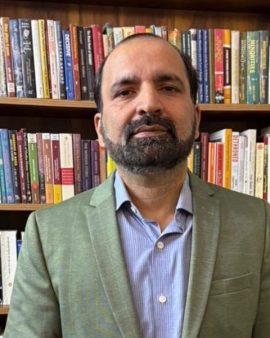
Ubaidur Rahman - selected in the list of  - 2025

Ubaidur Rahman

Syed Ubaidur Rahman: Chronicler of Forgotten Histories

Syed Ubaidur Rahman is a Delhi-based historian and author known for his meticulous scholarship and passionate engagement with India’s social, political, and intellectual history. With a rare ability to bridge academic rigor and accessible storytelling, Rahman has emerged as an important voice documenting narratives that often remain absent from mainstream historical discourse.

Trained in history and deeply rooted in archival research, Rahman’s work focuses on the lived experiences of marginalized communities, the evolution of Muslim societies in South Asia, and the complex interplay between power, politics, and identity in modern India. His writings are marked by a strong commitment to factual accuracy, critical inquiry, and moral clarity, making them valuable both to scholars and general readers.

Based in New Delhi, Rahman has spent years engaging with libraries, archives, and oral histories, carefully piecing together accounts that challenge simplistic or one-sided interpretations of the past. As an author, he is particularly respected for his ability to contextualize historical events within broader social and political frameworks, helping readers understand how history continues to shape contemporary realities.

Beyond books, Syed Ubaidur Rahman is also a regular contributor to journals, magazines, and digital platforms, where he writes essays and commentaries on history, culture, and current affairs. His articles often spark thoughtful debate, as they combine historical depth with sharp analysis of present-day issues. Colleagues and readers alike admire his calm, evidence-based approach in an era increasingly marked by polarised narratives.

Rahman’s work reflects a larger mission: to preserve historical truth, promote informed dialogue, and encourage critical thinking among younger generations. By foregrounding neglected voices and uncomfortable questions, he has carved a distinct space for himself in India’s intellectual landscape. As a historian and author, Syed Ubaidur Rahman continues to remind readers that history is not merely about the past—it is an essential guide to understanding the present and shaping a more just future.


Muslim Mirror 100: The Most Influential Indian Muslims 2025

Copyright © 2024 | All rights reserved. | Website Designed & Maintained by Aash App Developers