Muslim Mirror 100: The Most Influential Indian Muslims 2025

Politicians

Browse Lists by Year:


Agha Mahdi - selected in the list of  - 2025

Agha Mahdi

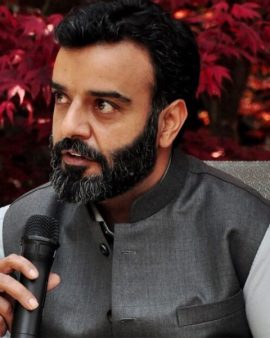
Agha Mahdi: A New-Generation Political Voice from Kashmir

In a region where politics is deeply shaped by history, identity, and prolonged uncertainty, Agha Mahdi represents a younger political voice seeking space in Jammu and Kashmir’s crowded and often turbulent public sphere. Soft-spoken yet assertive, digitally fluent yet grounded in grassroots realities, Agha Mahdi belongs to a generation of leaders attempting to redefine political engagement in post-2019 Kashmir.

Born into the influential Agha family of Srinagar, Agha Mahdi is the son of Agha Ruhullah Mehdi, a senior leader of the Jammu and Kashmir National Conference (JKNC) and a sitting Member of Parliament. Political legacy, however, has been both an advantage and a challenge. While his surname opened doors, it also placed expectations on his shoulders—expectations he has tried to meet through visibility, activism, and sustained engagement with public issues rather than mere inheritance.

Affiliated with the National Conference, Agha Mahdi has gradually emerged as a recognisable youth leader within the party’s broader structure. He has been particularly active in articulating concerns around youth unemployment, shrinking democratic space, civil liberties, and the political future of Jammu and Kashmir. His political interventions often reflect frustration shared by many young Kashmiris, but they are framed within the language of constitutionalism and democratic struggle.

Unlike traditional politicians who rely heavily on rallies and party platforms, Agha Mahdi has effectively used social media as a political tool. Through regular posts, statements, and short videos, he comments on developments in Kashmir, challenges official narratives, and responds to public grievances. This digital presence has helped him connect with a younger, politically conscious audience that often feels excluded from mainstream decision-making processes.

The abrogation of Article 370 in August 2019 marked a defining moment for Kashmiri politics, and for Agha Mahdi, it sharpened his political voice. Since then, he has been a consistent critic of policies he believes have weakened democratic institutions and distanced governance from the people. Yet, his criticism has largely avoided incendiary rhetoric. Instead, he has repeatedly emphasized political dialogue, dignity, and sustained democratic engagement as the only viable path forward.

Those who have observed him closely describe Agha Mahdi as composed, accessible, and politically alert. He often participates in public meetings, student interactions, and civil society discussions, projecting himself as a listener as much as a speaker. This approach has earned him credibility among sections of the youth who are skeptical of conventional politics but still seek representation.

At a time when many young people in Kashmir are disengaging from political processes altogether, Agha Mahdi’s presence signals an attempt to reclaim political space rather than abandon it. He does not claim quick solutions to Kashmir’s long-standing challenges, but his emphasis on participation, accountability, and constitutional rights positions him as part of a gradual, long-term political shift.

As Jammu and Kashmir continues to navigate an uncertain political transition, Agha Mahdi stands at the intersection of legacy and change. Whether he evolves into a major political force remains to be seen, but his growing visibility suggests that he is determined to be more than just a political heir—he aims to be a voice of his generation.


Akhtarul Iman - selected in the list of  - 2025

Akhtarul Iman

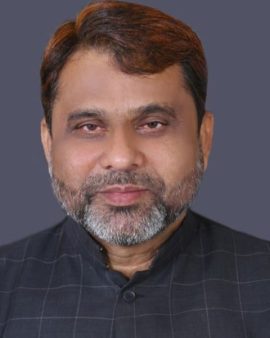
Akhtarul Iman: A Firm Voice of Muslim Representation in Bihar Politics

Akhtarul Iman is a prominent political leader from Bihar and a senior figure in the All India Majlis-e-Ittehadul Muslimeen (AIMIM). Known for his articulate speeches and grassroots connect, he has emerged as one of the most visible Muslim political voices in the state. He currently serves as a Member of the Bihar Legislative Assembly, representing the Amour constituency in Purnia district, a region with a significant minority population.

Akhtarul Iman’s political journey is marked by consistency, perseverance, and a strong commitment to minority rights and social justice. He began his career in regional politics and gradually built a reputation as a leader who speaks fearlessly on issues affecting marginalized communities, particularly Muslims, Dalits, and backward classes. His entry into AIMIM strengthened the party’s organizational presence in Bihar, especially in the Seemanchal region, where issues of poverty, migration, lack of infrastructure, and communal harmony remain pressing.

As an MLA, Akhtarul Iman has repeatedly raised concerns in the Bihar Assembly regarding education, healthcare, unemployment, flood relief, and law-and-order issues affecting his constituency. He is known for holding the government accountable through pointed questions and interventions, earning him recognition beyond party lines. His political style combines assertiveness with accessibility, making him popular among youth and grassroots workers.

Akhtarul Iman is also credited with playing a key role in expanding AIMIM’s footprint in Bihar, helping the party emerge as a significant political force in minority-dominated areas. Despite facing criticism from rivals, he remains steadfast in his belief that Muslims must have an independent and effective political voice within India’s democratic framework.

Grounded, outspoken, and deeply connected to his constituency, Akhtarul Iman continues to be a central figure in Bihar’s evolving political landscape, particularly in debates around minority representation and inclusive development.


Asaduddin Owaisi - selected in the list of  - 2025

Asaduddin Owaisi

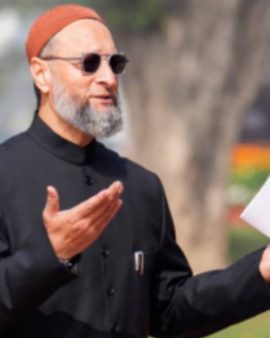
Asaduddin Owaisi: Politician

Asaduddin Owaisi (born in 1969) is a prominent Indian politician, lawyer, and the president of the All India Majlis-e-Ittehadul Muslimeen (AIMIM). Born in Hyderabad, Telangana, Owaisi hails from a distinguished family of political leaders. His father, Sultan Salahuddin Owaisi, was a renowned politician and former president of AIMIM, laying the foundation for Asaduddin’s future in politics.

Owaisi completed his schooling in Hyderabad and went on to study law at Lincoln's Inn in London, becoming a barrister. His legal training and sharp oratory skills have significantly contributed to his political career. Returning to India, Owaisi entered politics, continuing his family's legacy. He was first elected as a Member of Parliament (MP) for Hyderabad in 2004 and has since been re-elected multiple times, becoming a vocal and influential figure in Indian politics.

As the president of AIMIM, Owaisi has transformed the party from a regional entity into a significant political force with a growing presence across various states in India. Under his leadership, AIMIM has focused on issues concerning Muslims and other marginalized communities, advocating for their rights and socio-economic development. Owaisi's speeches and parliamentary interventions often address critical issues such as communalism, social justice, and minority rights.

Owaisi is known for his articulate and impassioned speeches, both in Parliament and public rallies. He has been a strong critic of policies he perceives as discriminatory towards Muslims and other minority groups. Despite facing criticism and controversy, Owaisi remains steadfast in his commitment to secularism and inclusive politics. His leadership style combines a deep understanding of legal and constitutional matters with a pragmatic approach to electoral politics.

Beyond his political endeavors, Owaisi is involved in various social and educational initiatives through the Owaisi Hospital & Research Centre and several educational institutions aimed at improving the socio-economic conditions of the underprivileged.

Asaduddin Owaisi's dynamic leadership and unwavering advocacy for minority rights have earned him a prominent place in Indian politics. His work continues to inspire many, highlighting the importance of representation, justice, and equality in a diverse democracy.


Asim Waqar - selected in the list of  - 2025

Asim Waqar

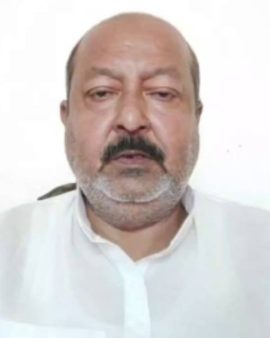
Syed Asim Waqar: A Sharp Voice of Constitutional Politics in Contemporary India

Syed Asim Waqar has emerged as a prominent and articulate spokesperson of the All India Majlis-e-Ittehadul Muslimeen (AIMIM), representing a new generation of political communicators who combine legal clarity, constitutional commitment, and grassroots awareness. Known for his calm yet firm articulation, Waqar has become a familiar face in television debates, digital media platforms, and political discussions centered on minority rights, democratic values, and social justice.

Trained in law, Syed Asim Waqar brings a strong constitutional perspective to political discourse. His interventions often foreground the principles of equality before law, secularism, and federalism, positioning AIMIM’s arguments within the framework of the Indian Constitution rather than identity rhetoric alone. This legal grounding has helped him counter majoritarian narratives with data, precedent, and constitutional reasoning.

As AIMIM spokesperson, Waqar has played a crucial role in explaining the party’s stance on issues ranging from civil liberties and electoral representation to discrimination, communal polarization, and governance failures. He is particularly vocal on matters affecting marginalized communities, including Muslims, Dalits, and other backward groups, while consistently emphasizing that constitutional protections are meant for all citizens, not any single community.

Unlike aggressive political communicators, Waqar’s style is marked by restraint and precision. He avoids sensationalism, focusing instead on facts, policy gaps, and democratic accountability. This approach has earned him credibility even among critics who may disagree with AIMIM’s politics but acknowledge the coherence of his arguments.

Beyond television studios, Syed Asim Waqar is actively engaged with students, civil society groups, and young political workers, encouraging informed participation in democratic processes. He represents a growing tendency within Indian politics where ideological clarity is paired with intellectual discipline.

In an increasingly polarized public sphere, Syed Asim Waqar stands out as a spokesperson who seeks to anchor political debate in constitutional morality, making him a significant voice in contemporary Indian political communication.


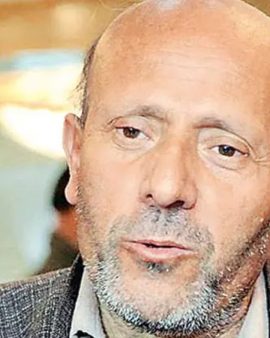
Engineer Rashid - selected in the list of  - 2025

Engineer Rashid

Engineer Rashid: A Grassroots Leader and Defiant Voice from Kashmir

Sheikh Abdul Rashid, popularly known as Engineer Rashid, is a prominent and unconventional political figure from Jammu and Kashmir. Born on 19 August 1967 in Langate, Handwara, Rashid has emerged as a powerful grassroots leader known for his fiery speeches, simple lifestyle, and unwavering connection with ordinary people. In 2024, he was elected as a Member of Parliament to the Lok Sabha from the Baramulla constituency, marking a significant moment in contemporary Kashmiri politics.

Rashid’s political consciousness developed early in life. As a teenager, he became associated with Kashmiri political movements and joined the Abdul Ghani Lone-led People’s Conference in 1978. He later witnessed the turbulent 1987 elections, widely regarded as a turning point in Kashmir’s political history. Academically, Rashid earned a Bachelor of Science degree in 1988 and later completed a diploma in civil engineering. He worked for over a decade as an engineer with the Jammu and Kashmir Projects Construction Corporation, a background that earned him the sobriquet “Engineer Rashid.”

Transitioning formally into politics in 2008, Rashid contested and won the Langate विधानसभा seat as an independent candidate, a feat he repeated in 2014. He later founded the Jammu and Kashmir Awami Ittehad Party, positioning it as a platform rooted in local aspirations and resistance politics. Known for his austere lifestyle—often seen wearing a traditional khan suit and using public transport—Rashid cultivated an image of simplicity and accessibility.

Despite facing repeated arrests, including incarceration under the Unlawful Activities (Prevention) Act (UAPA) in 2019 on terror-funding charges, Rashid retained strong popular support. Contesting the 2024 Lok Sabha elections from jail, he delivered a stunning victory over former Chief Minister Omar Abdullah, underscoring his deep grassroots appeal. Granted interim bail in September 2024 to campaign in the Jammu and Kashmir Assembly elections, Engineer Rashid remains a symbol of defiance, controversy, and mass-based politics in the region.


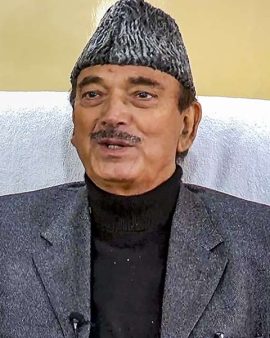
Ghulam Nabi Azad - selected in the list of  - 2025

Ghulam Nabi Azad

Ghulam Nabi Azad: A Veteran Statesman of Indian Politics

Ghulam Nabi Azad, born on 7 March 1949, is one of India’s most experienced and respected political leaders, known for his long and distinguished career in parliamentary democracy and governance. A prominent figure in national and Jammu and Kashmir politics, Azad served as the Leader of the Opposition in the Rajya Sabha from 2014 to 2021 and as the Chief Minister of the erstwhile state of Jammu and Kashmir from 2005 to 2008.

Azad was born in the village of Soti in Gandoh tehsil (Bhalessa) of Doda district, Jammu and Kashmir, to Rahamatullah Batt and Basa Begum. He received his early education locally before moving to Jammu, where he completed his Bachelor of Science degree from G.G.M. Science College. He later earned a Master’s degree in Zoology from the University of Kashmir in 1972, reflecting his strong academic grounding before entering public life.

His political journey began in 1973 as Secretary of the Block Congress Committee in Bhalessa. Rapidly rising through the ranks, he became President of the Jammu and Kashmir Pradesh Youth Congress in 1975 and was appointed President of the All India Youth Congress in 1980. The same year, he was elected to the Seventh Lok Sabha from Washim constituency in Maharashtra, marking his entry into national politics.

Azad went on to hold several key ministerial positions at the Centre, including Union Minister for Parliamentary Affairs, Civil Aviation, and Health and Family Welfare. As Chief Minister of Jammu and Kashmir, he focused on governance, development, and stability, though his government ended in 2008 following the withdrawal of coalition support.

In August 2022, Azad resigned from the Indian National Congress and, on 26 September 2022, launched his own political outfit—the Democratic Progressive Azad Party—serving as its chief patron and founder. In recognition of his contributions to public affairs, he was awarded the Padma Bhushan in 2022. In 2023, he was also appointed to a government committee tasked with suggesting reforms for simultaneous elections, underscoring his continued relevance in India’s public life.


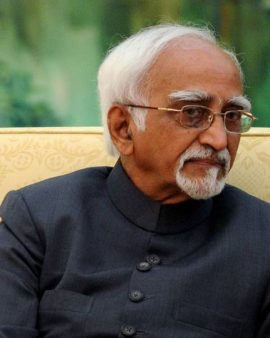
Hamid Ansari - selected in the list of  - 2025

Hamid Ansari

Hamid Ansari: Politician, Diplomat and  Scholar

Mohammad Hamid Ansari (born in 1937) is a distinguished diplomat, academic, and politician who served as the 12th Vice President of India from 2007 to 2017. His illustrious career spans over five decades, encompassing diplomacy, academia, and public service.

Ansari began his education in Kolkata and completed his postgraduate studies in Political Science from Aligarh Muslim University. He joined the Indian Foreign Service (IFS) in 1961, marking the start of a long and accomplished diplomatic career. Ansari served in critical roles, including as India’s ambassador to the United Arab Emirates, Afghanistan, Iran, and Saudi Arabia. His tenure as Permanent Representative of India to the United Nations further solidified his reputation as a skilled diplomat and statesman.

In academia, Ansari served as Vice-Chancellor of Aligarh Muslim University, where he worked to modernize the institution and bridge the gap between traditional and contemporary education. Later, he became the Chairperson of the National Commission for Minorities, advocating for minority rights and inclusive development in India.

Ansari’s election as Vice President in 2007 was a testament to his commitment to democratic values and constitutional governance. As Chairman of the Rajya Sabha, he was known for his impartiality and emphasis on decorum in parliamentary proceedings. He was re-elected for a second term in 2012, becoming one of the few Vice Presidents to serve two consecutive terms.

A prolific writer and speaker, Ansari has authored books and essays on topics ranging from international relations to constitutional values and social justice. His book, Dare I Question?, reflects his insights on governance and democracy.

Hamid Ansari’s legacy is defined by his diplomatic finesse, commitment to constitutional principles, and advocacy for pluralism and secularism, making him one of India’s most respected public figures.


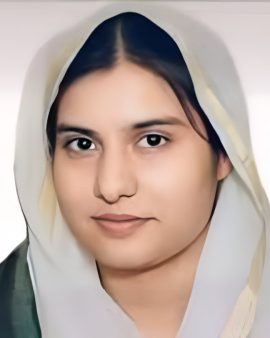
Iqra Hasan Choudhary - selected in the list of  - 2025

Iqra Hasan Choudhary

Iqra Hasan: A Young Parliamentarian Shaping a New Political Narrative

Iqra Hasan represents a new generation of Indian political leadership—educated, articulate, and deeply rooted in constitutional values. As a Member of Parliament, she has emerged as a significant voice for representation, social justice, and democratic engagement, particularly at a time when Indian politics is witnessing intense polarization and generational change.

Born into a politically active family, Iqra Hasan grew up observing public life closely. She is the daughter of the late Chaudhary Munawwar Hasan, a respected political figure from western Uttar Pradesh. While her lineage provided early exposure to politics, her journey has been defined by personal merit, academic rigor, and a strong sense of responsibility toward public service. She pursued higher education at prestigious institutions in India and abroad, equipping herself with a global outlook and a firm grounding in law, governance, and democratic principles.

Iqra Hasan entered electoral politics at a relatively young age, carrying with her the aspirations of a constituency that has often felt unheard. Her election to Parliament was widely seen as a generational shift—one that brought youthful energy, professionalism, and a modern sensibility into legislative politics. As an MP, she has consistently emphasized issues such as constitutional rights, rule of law, women’s empowerment, social harmony, and equitable development.

What distinguishes Iqra Hasan’s political style is her calm yet firm articulation. She avoids incendiary rhetoric and instead relies on reasoned arguments, data, and constitutional language. In Parliament and public forums, she has spoken about the importance of protecting democratic institutions, safeguarding minority rights, and ensuring that governance remains inclusive. Her approach reflects a belief that dissent is not disloyalty, but an essential pillar of democracy.

As a young woman in a male-dominated political space, Iqra Hasan’s presence itself carries symbolic significance. She has become a role model for young women who aspire to participate in public life but often face structural and cultural barriers. Rather than projecting herself as an exception, she consistently emphasizes the need to normalize women’s leadership and expand opportunities for broader participation.

Iqra Hasan is also known for her strong connect with the grassroots. She remains actively engaged with constituents, addressing everyday concerns related to education, healthcare, livelihoods, and civic administration. Her politics is grounded not only in national debates, but also in the lived realities of people—farmers, students, women, and small traders—who seek dignity and fairness from the system.

In an era where politics is often driven by spectacle and soundbites, Iqra Hasan represents a quieter, more substantive form of leadership. She belongs to a generation that values preparation over provocation and dialogue over domination. Her confidence comes not from aggression, but from clarity of purpose and belief in constitutional morality.

Iqra Hasan’s journey is still unfolding, but her rise already signals an important shift in Indian politics. She embodies the promise of a leadership that is youthful yet responsible, assertive yet empathetic. For many young Indians, she stands as proof that politics can still be a space for integrity, intelligence, and meaningful change—where public office is not about power alone, but about service, representation, and hope for a more just future.


K Rahman Khan - selected in the list of  - 2025

K Rahman Khan

K. Rahman Khan: A Statesman of Consensus and Community

K. Rahman Khan’s political career spans decades of service, advocacy, and institution-building, marking him as one of India’s distinguished statesmen. Known for his measured leadership and commitment to inclusive governance, Khan’s journey reflects a dedication to public service grounded in dialogue, consensus, and community engagement.

Born in 1939 in Karnataka, K. Rahman Khan pursued higher education with a focus on law and political science, equipping himself with the intellectual tools that would later underpin his political philosophy. His early life was shaped by an awareness of social inequalities and the importance of constitutional rights, which inspired him to enter public life with a vision that combined advocacy with practical governance.

Khan’s political trajectory is closely associated with the Indian National Congress, where he rose through the ranks on the strength of his organizational skills, integrity, and capacity to build consensus across diverse groups. His tenure as Union Minister of Minority Affairs and as a member of the Rajya Sabha brought him into national prominence, enabling him to influence policy on education, minority welfare, and social justice.

One of K. Rahman Khan’s defining traits as a politician is his emphasis on dialogue and consensus-building. At a time when political discourse often leans toward polarization, Khan has consistently sought to bridge divides, both within his party and across the broader political spectrum. Colleagues describe him as a patient negotiator—someone who listens attentively, weighs evidence, and crafts solutions that balance competing interests without compromising on principles.

As Union Minister of Minority Affairs, Khan focused on improving educational and economic opportunities for marginalized communities. He championed initiatives that aimed to increase literacy, expand access to higher education, and support skill development. For him, empowerment was not about temporary relief, but about creating sustainable pathways for growth, opportunity, and social integration.

Khan’s leadership style is defined by integrity, humility, and public accountability. Despite holding influential positions, he has remained approachable and deeply connected to grassroots realities. His speeches and interventions often reflect a thoughtful consideration of both policy and human impact, highlighting his belief that governance must be measured by its effects on ordinary lives.

Beyond policy, K. Rahman Khan has contributed to strengthening institutions and civic structures. He has played a role in parliamentary committees, advisory councils, and community forums, consistently emphasizing the importance of institutional robustness over personal ambition. For him, democracy thrives not through rhetoric, but through transparent institutions and participatory engagement.

Even after decades in public life, Khan’s commitment to service remains undiminished. He continues to advocate for education, social equity, and communal harmony, leveraging his experience to mentor young leaders and advise policymakers. His enduring influence stems from a rare combination of principled leadership, pragmatic strategy, and moral courage.

K. Rahman Khan’s career exemplifies a vision of politics as a vehicle for constructive change. In an era where governance is often reduced to spectacle, he stands out as a politician who demonstrates that true leadership is rooted in service, dialogue, and the pursuit of justice for all.


Kader Mohideen - selected in the list of  - 2025

Kader Mohideen

K.M.Kader Mohiuddin: Politician

K. M. Kader Mohideen, a seasoned politician and educationist from Tamil Nadu, has played a pivotal role in the socio-political landscape of the state. Born in Kadayanallur, Tamil Nadu, Mohideen is known for his unwavering commitment to public service and advocacy for marginalized communities.

He served as a Member of Parliament in the Rajya Sabha, representing Tamil Nadu as part of the Indian Union Muslim League (IUML). During his tenure, Mohideen emerged as a prominent voice on issues concerning minority rights, education, and social justice. His articulate debates and reasoned arguments in Parliament earned him respect across political lines.

In addition to his political career, Mohideen has been a steadfast advocate for education, emphasizing its transformative power. As an educationist, he has contributed significantly to the establishment and development of educational institutions that cater to underprivileged sections of society. His vision aligns with the ideals of empowering communities through knowledge and skill development.

Mohideen's leadership within the IUML has been instrumental in steering the party toward addressing grassroots issues. Under his guidance, the IUML has consistently worked for communal harmony, inclusive development, and representation for minorities in policymaking.

A principled leader, Kader Mohideen is admired for his integrity and humility. He remains a source of inspiration for young leaders aspiring to enter politics with a commitment to ethical governance and societal betterment.

Even outside active politics, K. M. Kader Mohideen continues to engage with the community, offering his wisdom and experience to guide future generations. His legacy reflects his dedication to building a just, equitable, and harmonious society.


Md Shafi - selected in the list of  - 2025

Md Shafi

Md Shafi: Steering SDPI Through a Crucial Political Moment

Md Shafi has emerged as an important organizational leader within India’s evolving political landscape as the Acting President of the Social Democratic Party of India (SDPI). Known for his measured approach, grassroots orientation, and ideological clarity, Shafi represents a phase of consolidation and transition for the party at a time when questions of democracy, social justice, and representation occupy the national discourse.

A long-time associate of SDPI, Md Shafi’s political journey has been shaped more by organizational work than by spectacle. He is regarded as a cadre-based leader who rose through sustained engagement at the ground level, working closely with party workers, community groups, and civil society platforms. This background has given him a practical understanding of political mobilization, internal discipline, and the challenges faced by marginalized sections of society.

As Acting President, Md Shafi assumed responsibility during a sensitive period for the party, requiring steadiness rather than rhetoric. His leadership has focused on maintaining organizational cohesion, strengthening internal structures, and reinforcing SDPI’s ideological commitment to constitutional values, social democracy, and peaceful political participation. Party insiders describe him as a consensus-builder who values consultation and collective decision-making over centralized authority.

Md Shafi’s political outlook is rooted in the belief that democracy must function beyond elections alone. He has consistently emphasized issues such as civil liberties, minority rights, economic justice, and the protection of constitutional institutions. Under his stewardship, SDPI has continued to articulate concerns related to discrimination, social exclusion, and governance failures, while positioning itself as a platform for democratic assertion rather than confrontation.

Unlike leaders who rely heavily on personal branding, Md Shafi has kept a relatively low public profile, preferring to work behind the scenes. His public statements tend to be restrained and issue-focused, reflecting an effort to engage the political process through argument, law, and dialogue. This approach has helped him project SDPI as an organization-driven party rather than one centered on individual personalities.

Organizational discipline has been a key feature of his leadership style. Md Shafi is known for emphasizing training, ideological orientation, and ethical conduct among party workers. He believes that credibility in politics is built slowly—through consistency in words and actions—and that parties representing marginalized voices must hold themselves to especially high standards of accountability.

At a time when Indian politics is increasingly polarized, Md Shafi’s role as Acting President has involved navigating both external pressures and internal expectations. His challenge has been to sustain the party’s political relevance while ensuring that its engagement remains firmly within democratic and constitutional boundaries. Observers note that his calm demeanor and institutional focus have helped SDPI maintain continuity during a period of transition.

Md Shafi’s political journey may not yet be defined by mass electoral success or headline-grabbing moments, but it reflects a different kind of leadership—one rooted in patience, organization, and ideological persistence. As SDPI continues to define its role in India’s political ecosystem, his tenure as Acting President underscores the importance of steady leadership during uncertain times.

In a political environment often driven by immediacy and noise, Md Shafi represents a quieter tradition of politics—where leadership is exercised through structure, principle, and long-term commitment to democratic participation.


Mehbooba Mufti - selected in the list of  - 2025

Mehbooba Mufti

Mehbooba Mufti: A Defiant Voice for Democracy and Dialogue in Jammu and Kashmir

 Mehbooba Mufti (born in 1959) is  a prominent Indian politician and former Chief Minister of Jammu and Kashmir, has played a pivotal role in shaping the region's political landscape. She is the daughter of Mufti Mohammad Sayeed, a veteran politician and founder of the Jammu and Kashmir Peoples Democratic Party (PDP).

 Mehbooba began her political career in the Congress Party but later joined her father in establishing the PDP in 1999. Known for her grassroots connect and empathetic approach, she quickly rose through the ranks, becoming the PDP’s first woman president. In the 2002 Jammu and Kashmir Assembly elections, she secured a victory from the Pahalgam constituency, marking the PDP's emergence as a significant political force.

 In 2016, Mehbooba Mufti became the first woman Chief Minister of Jammu and Kashmir, succeeding her father after his demise. Her tenure was marked by efforts to balance governance in a volatile region and promote dialogue between the state and central governments. However, her alliance with the Bharatiya Janata Party (BJP) was heavily criticized, leading to the coalition’s collapse in 2018.

 Post the abrogation of Article 370 in 2019, Mehbooba was placed under detention for over a year, further solidifying her image as a strong voice advocating for Jammu and Kashmir's special status and rights. She has consistently called for dialogue and reconciliation, often taking bold stands against divisive policies.

 A charismatic leader with a deep connection to her people, Mehbooba Mufti remains a significant figure in Indian politics, championing democracy, regional autonomy, and peace in a challenging environment.


Mohibbullah Nadvi - selected in the list of  - 2025

Mohibbullah Nadvi

Mohibbullah Nadvi: Islamic Scholar and Member of Parliament from Rampur

Mohibbullah Nadvi (born 1 January 1976) is an Indian Islamic scholar, cleric, and politician who currently serves as a Member of Parliament in the Lok Sabha, representing the Rampur constituency of Uttar Pradesh. He is also the Imam of the Parliament Street Mosque in New Delhi and is affiliated with the Samajwadi Party.

Born in Razanagar village of Rampur district to Mohammad Ali, Nadvi received his early religious education locally, memorising the Quran (Hifz) in Rampur before continuing his studies at a madrasa in Sambhal. He later pursued advanced Islamic education at Darul Uloom Nadwatul Ulama, Lucknow, where he earned the title “Nadvi,” signifying his scholarly training.

Seeking broader academic exposure, Nadvi briefly studied in Aligarh before enrolling at Jamia Millia Islamia, New Delhi, where he completed a Bachelor’s degree in Arabic (Honours). He later obtained a Master’s degree in Islamic Studies and a Bachelor of Education (BEd) from Al-Falah University, reflecting his engagement with both traditional and modern education systems.

On 28 March 2005, Mohibbullah Nadvi was appointed Imam of the Parliament Street Mosque, a historic religious institution frequented by political leaders, diplomats, and parliamentarians. His role brought him national visibility as a religious figure closely associated with India’s political centre.

In the 2024 Lok Sabha elections, Nadvi entered electoral politics and defeated BJP candidate Ghanshyam Singh Lodhi by a margin of 87,434 votes, marking a significant political victory in Rampur. In Parliament, he has spoken on national and international issues, advocating India’s role as a mediator in global conflicts, including Gaza and Ukraine, emphasising humanitarian values.

Nadvi has also faced controversy related to visits by political leaders to the Parliament Street Mosque. He has consistently denied allegations of misuse of the mosque, maintaining that such interactions were informal, non-political, and in keeping with the mosque’s historical tradition.


Najeeb Jung - selected in the list of  - 2025

Najeeb Jung

Najeeb Jung: Administrator, Scholar, and the Art of Public Balance

Najeeb Jung occupies a distinctive place in India’s public life—one shaped not by electoral politics but by administration, scholarship, and quiet diplomacy. Best known for serving as the Lieutenant Governor of Delhi from 2014 to 2016, Jung’s career reflects a rare blend of academic depth, institutional experience, and an ability to navigate complex political environments with restraint and intellect.

Born in 1956, Najeeb Jung was educated in some of the world’s finest institutions. He studied history at St. Stephen’s College, Delhi, before pursuing higher education at Oxford University, where he earned a doctorate in medieval Indian history. This grounding in historical scholarship has often been reflected in his public persona—measured, analytical, and conscious of institutional continuity rather than short-term political gain.

Before entering high-profile administrative roles, Jung built a distinguished career in international development. He worked for decades with organizations such as the Asian Development Bank and the United Nations Development Programme (UNDP), where he was involved in projects spanning governance reform, infrastructure development, and poverty alleviation across South and Southeast Asia. These years gave him a global outlook and a practical understanding of how policy decisions affect lives on the ground.

Najeeb Jung came into national prominence with his appointment as Delhi’s Lieutenant Governor at a time of intense political flux. His tenure coincided with a period of frequent institutional conflict between the elected Delhi government and the office of the Lieutenant Governor. Jung’s role placed him at the intersection of constitutional interpretation and political contestation, requiring a delicate balance between authority and restraint.

Supporters view Jung as a firm administrator who sought to uphold constitutional provisions and administrative norms in an unusually charged political atmosphere. Critics argue that his tenure exposed ambiguities in India’s federal structure, particularly concerning the governance of the National Capital Territory. Jung himself has often maintained that his actions were guided by constitutional duty rather than political alignment—a claim consistent with his self-image as an institutionalist rather than a partisan actor.

Beyond administration, Jung is widely regarded as a public intellectual. A prolific writer and commentator, he has authored several books and regularly contributes columns on history, politics, and contemporary governance. His writings reveal a mind attentive to nuance, often cautioning against simplistic narratives in an era increasingly defined by polarization and immediacy.

What sets Najeeb Jung apart is his ability to move between worlds—academia, international development, governance, and public commentary—without being wholly defined by any single role. Colleagues describe him as cerebral, soft-spoken, and intensely private, someone who prefers reasoned debate over rhetorical flourish.

Since stepping away from formal administrative office, Jung has continued to engage in public discourse through writing, lectures, and policy discussions. He remains a voice that emphasizes constitutionalism, institutional integrity, and the long view of history—qualities often in short supply in contemporary public life.

In an age dominated by spectacle and speed, Najeeb Jung represents a different tradition of leadership: one rooted in scholarship, process, and balance. Whether admired or contested, his career underscores the enduring relevance of intellectual rigor and institutional responsibility in navigating the complexities of modern governance.


Naseer Hussain - selected in the list of  - 2025

Naseer Hussain

Dr. Syed Naseer Hussain: Parliamentarian and Key Strategist of the Indian National Congress

Dr. Syed Naseer Hussain (born 10 June 1970) is a senior Indian politician from Karnataka and a prominent leader of the Indian National Congress (INC). He currently serves as a Member of Parliament in the Rajya Sabha, representing Karnataka. Within the Congress organisation, he holds several crucial responsibilities, including Member of the Congress Working Committee (CWC), General Secretary in charge of Jammu & Kashmir and Ladakh, National Spokesperson, and Whip of the Congress Parliamentary Party (CPP) in the Rajya Sabha.

Dr. Hussain played a key organisational role in the party’s highest office. He served as Officer on Special Duty to the President of the Indian National Congress, Shri Mallikarjun Kharge, from December 2023 to February 2025, and earlier acted as campaign manager for Kharge during the Congress presidential election. Known for his articulate interventions, he has emerged as a strong parliamentary voice on constitutional values, civil liberties, farmers’ rights, labour laws, and democratic accountability. His commitment to protest inside Parliament has led to multiple suspensions, reflecting his confrontational yet principled political style.

Born in Channagiri, Davanagere district, and raised in Ballari, Dr. Hussain comes from a socially conscious Kannadiga Muslim family. His father, Syed Hafeez, was a trade union leader and KSRTC traffic inspector, while his mother, Akhtar Unnisa, served as a government school headmistress. Their progressive outlook and emphasis on education deeply shaped his political and social worldview.

A lifelong student leader, Dr. Hussain’s political journey began early and flourished through successive leadership roles in educational institutions across Karnataka. He graduated in History, Economics, and Political Science from St. Philomena’s College, Mysore, earned a Master’s degree in Political Science from the University of Mysore, and later completed his M.Phil and Ph.D in International Relations from Jawaharlal Nehru University (JNU), New Delhi. At JNU, he rose through the ranks to become President of the JNU Students’ Union (1999–2000), cementing his reputation as a formidable organiser and debater.

With decades of political activism, academic grounding, and organisational experience, Dr. Syed Naseer Hussain stands out as one of the Congress party’s most articulate and strategically significant leaders from Karnataka.


Omar Abdullah - selected in the list of  - 2025

Omar Abdullah

Omar Abdullah: Politician

Omar Abdullah, born on March 10, 1970, is an influential Indian politician currently serving as the chief minister of the union territory of Jammu and Kashmir. He was previously the chief minister of the state from 2009 to 2014 and has been the vice president of the Jammu and Kashmir National Conference since 2009. Abdullah began his political career in 1998 when he became the youngest member of the Lok Sabha, representing Srinagar until 2009 and also served as the Union Minister of State for External Affairs under Atal Bihari Vajpayee's NDA government.

The son of former chief minister Farooq Abdullah and grandson of Sheikh Abdullah, Omar continued a family legacy in politics. He notably became the 11th chief minister of Jammu and Kashmir on January 5, 2009, leading a coalition government. However, he faced political challenges, including the defeat of his party in the 2002 elections, though they returned to power in 2008. His government aimed to address issues stemming from insurgency and violence in the region.

In 2019, Abdullah was detained in connection with the revocation of Article 370, which stripped Jammu and Kashmir of its semi-autonomous status, a move he vehemently opposed. Abdullah was released from detention in March 2020. Following his return to politics, he participated in the 2024 elections, where his party, in alliance with the INDIA bloc, secured enough seats for him to be sworn in again as chief minister on October 16, 2024.

Personal life details include his early education in Kashmir and England. Born to a nurse and a politician, Abdullah briefly worked in the private sector before entering politics. He has since taken active roles in various committees and retained significant influence within his party and the region’s political landscape.


Rakibul Hussain - selected in the list of  - 2025

Rakibul Hussain

Rakibul Hussain: Politician

Rakibul Hussain (born in 1964) is a prominent Indian politician and a seasoned leader with a dynamic political career spanning decades. Currently serving as the Member of Parliament in the Lok Sabha from Dhubri, Assam, his victory in the 2024 Lok Sabha elections, defeating AIUDF chief Maulana Badruddin Ajmal by a staggering margin of 10,12,476 votes, stands as a testament to his widespread appeal and political acumen.

A postgraduate in Political Science from Aligarh Muslim University, Hussain's academic foundation has greatly shaped his political perspective. He began his political journey with the Indian National Congress, representing the Samaguri constituency in the Assam Legislative Assembly since 2001. His consistent electoral success highlights his deep connection with his constituents.

Hussain held several significant ministerial portfolios in the Tarun Gogoi-led government in Assam, showcasing his versatility. Between 2002 and 2016, he served as Minister of State and later as Cabinet Minister for Home, Political Affairs, Forest and Environment, Panchayat and Rural Development, Tourism, Information and Public Relations, and other key departments. His contributions during this period were pivotal in driving development initiatives, enhancing environmental policies, and improving rural governance.

From 2021 to 2024, Hussain served as the Deputy Leader of the Opposition in the Assam Legislative Assembly, where he played a critical role in articulating the opposition's stand on crucial state issues.

Beyond politics, Hussain has been actively involved in sports administration. He served as General Secretary of the Assam Olympic Association and became the President of the All India Carrom Federation in 2015, promoting sports development in the region.

Rakibul Hussain's political journey is marked by dedication, effective governance, and a commitment to public service, making him a key figure in Assam's political landscape.


Sadiq Ali Shihab Thangal - selected in the list of  - 2025

Sadiq Ali Shihab Thangal

Panakkad Sayyid Sadiq Ali Shihab Thangal: Religious Leader and IUML President in Kerala

Panakkad Sayyid Sadiq Ali Shihab Thangal (born 25 May 1964), born Habib Sadiq Ali Shihab bin Ali Al-Hussaini Ba Alavi, is a prominent Sayyid (Thangal) community leader, religious scholar, and politician from Kerala, southern India. He currently serves as the Kerala State President of the Indian Union Muslim League (IUML) and is the Chancellor of Darul Huda Islamic University, one of the most influential Islamic higher education institutions in the state.

Sadiq Ali Thangal hails from the revered Panakkad Pukkoya family of South Malabar, a lineage that has played a central role in the religious and socio-political life of Kerala’s Muslim community for generations. He is the son of P. M. S. A. Pukkoya Thangal and the younger brother of Mohammedali Thangal, Umerali Thangal, and the late Hyderali Thangal, all of whom have been associated with religious and community leadership.

Deeply rooted in Sunni-Shafi‘i tradition, Sadiq Ali Thangal has long been associated with Samastha Kerala Jam‘iyyat al-‘Ulama (E. K. faction) and its student and youth wings, including the Samastha Kerala Sunni Students Federation (SKSSF) and the Sunni Yuvajana Sangam (SYS). He has also been closely involved with the Muslim Youth League, the youth wing of the IUML, helping nurture a new generation of community leaders.

In the political sphere, he served as Malappuram District President of the IUML for over a decade, building strong grassroots networks. During periods of illness faced by his brother Hyderali Thangal, he effectively led the party at the state level. In 2022, he was formally chosen as Hyderali Thangal’s successor as Kerala State President of the IUML and also assumed the role of Chairman of the National Political Advisory Committee of the party.

In addition to his political responsibilities, Sadiq Ali Thangal holds several key institutional roles, including Vice-President of Mounathul Islam Sabha, Ponnani, President of Noorul Huda Islamic College, Chairman of the Islamic Centre, Kozhikode, and Executive Committee Member of the Samastha Matha Vidyabhyasa Board, underscoring his enduring influence across religious, educational, and political domains.


Salman Khurshid Alam Khan - selected in the list of  - 2025

Salman Khurshid Alam Khan

Salman Khurshid Alam Khan (politician)

Salman Khurshid Alam Khan (born 1 January 1953) is an Indian politician, senior advocate, author, and law teacher. A member of the Indian National Congress, he served as the Cabinet Minister for External Affairs. Khurshid has represented Farrukhabad in the Lok Sabha, first from 1991–1996 and later in 2009. His political career began in 1981 as an Officer on Special Duty in the Prime Minister’s Office under Indira Gandhi. He later held roles as Deputy Minister of Commerce and Minister of State for External Affairs.

Born to Khurshed Alam Khan, a former Union Minister, and the grandson of Zakir Husain, India’s third President, Khurshid has Pathan ancestry linked to the Afridi and Kheshgi tribes. He was educated at St. Xavier’s High School, Delhi Public School, and St. Stephen’s College, Delhi. He earned his M.A. and Bachelor of Civil Law from St. Edmund Hall, Oxford, and taught law at Trinity College, Oxford.

Khurshid has held significant political roles, including President of the Uttar Pradesh Congress Committee and Delhi Public School Society. He was instrumental in managing portfolios for Minority Affairs, Corporate Affairs, and Law and Justice during his tenure as a Union Minister. Despite losing elections in 2014 and 2019, his political influence remains notable.

As a writer, Khurshid has authored the play Sons of Babur and books like Sunrise over Ayodhya, which sparked controversy for its critique of Hindutva, leading to his house being vandalized. He has also edited The Contemporary Conservative: Selected Writings of Dhiren Bhagat.

Khurshid and his wife Louise run the Zakir Hussain Memorial Trust, which faced allegations of financial mismanagement in 2012. Although they denied the charges, the controversy, dubbed "Operation Dhritrashtra," led to extensive investigations and public scrutiny. Despite challenges, Khurshid continues to be a prominent voice in Indian politics and intellectual circles.


Zameer Ahmed Khan - selected in the list of  - 2025

Zameer Ahmed Khan

Zameer Ahmed Khan: Karnataka Minister and Experienced Legislator

B.Z. Zameer Ahmed Khan is a prominent Indian politician from Karnataka, currently serving as the Minister for Housing, Minority Welfare, and Waqf in the state government. He represents the Chamarajpet constituency in Bengaluru as a Member of the Legislative Assembly (MLA) and is a senior leader of the Indian National Congress (INC). Known for his strong grassroots connection, leadership skills, and public engagement, Khan has been a visible figure in Karnataka politics for over two decades.

Born and raised in Karnataka, he has successfully contested multiple elections, serving as a three-term MLA from Chamarajpet. Over his political career, he has held key portfolios, including Minister for Haj and Waqf, before assuming his current responsibilities, overseeing housing policies, minority welfare programs, and administration of religious endowments. His leadership has often been noted for combining policy oversight with close engagement with local communities.

Outside politics, Khan has significant business interests, particularly in the transport and education sectors. He is a partner in National Travels, among other ventures, and has been involved in initiatives supporting educational institutions in Bengaluru and surrounding areas.

Khan maintains a strong public profile through frequent interactions with constituents and active engagement on social media platforms such as Instagram and Facebook, reflecting his commitment to accessibility and communication.

In 2021, Khan came under investigation by the Enforcement Directorate (ED) in connection with the multi-crore IMA scam, with raids conducted at his properties in August of that year. While the case attracted widespread media attention, Khan has continued his public service and political work, emphasizing his ongoing focus on governance and community welfare.

With decades of political experience, administrative responsibilities, and social engagement, B.Z. Zameer Ahmed Khan remains a key figure in Karnataka’s political landscape, particularly in matters concerning housing, minority welfare, and Waqf administration.


Muslim Mirror 100: The Most Influential Indian Muslims 2025

Copyright © 2024 | All rights reserved. | Website Designed & Maintained by Aash App Developers