Muslim Mirror 100: The Most Influential Indian Muslims 2025

Media Persons

Browse Lists by Year:


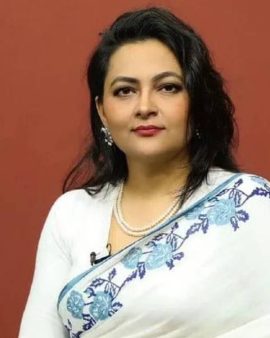
Arfa Khanam Sherwani - selected in the list of  - 2025

Arfa Khanam Sherwani

Arfa Khanum Sherwani: A Fearless Voice for Truth in Indian Journalism

Arfa Khanum Sherwani (born in 1980) is a prominent Indian journalist known for her fearless reporting, incisive analysis, and unwavering commitment to free speech and democratic values. With a career spanning over two decades, she has made significant contributions to the field of journalism, earning respect and recognition for her work on critical social, political, and human rights issues.

Born and raised in Bulandshahr, Uttar Pradesh, Arfa Khanum Sherwani pursued her higher education in journalism and mass communication, equipping herself with the skills and knowledge necessary for a career in media. She holds a Master's degree in Mass Communication from Aligarh Muslim University and further honed her journalistic skills with a postgraduate diploma from the Indian Institute of Mass Communication (IIMC) in New Delhi.

Sherwani began her career in journalism with the television news channel NDTV, where she worked as a reporter and anchor. Her dynamic reporting and ability to tackle challenging topics quickly set her apart in the competitive world of Indian media. Over the years, she has covered a wide range of issues, including political developments, social justice movements, and human rights abuses.

Currently, Arfa Khanum Sherwani is a senior editor at The Wire, an independent online news platform known for its investigative journalism and in-depth analysis. At The Wire, she has continued to produce impactful stories that highlight the voices of marginalized communities, expose injustices, and hold those in power accountable. Her reporting on issues such as religious intolerance, gender discrimination, and state repression has been particularly influential.

In addition to her work at The Wire, Sherwani is a regular commentator on various television news channels and public forums, where she provides insightful analysis on current affairs. Her articulate and well-informed perspectives have made her a respected voice in the media landscape.

Arfa Khanum Sherwani's dedication to journalism extends beyond reporting; she is also a strong advocate for press freedom and the protection of journalists. She has been vocal about the challenges faced by the media in India, including censorship, intimidation, and attacks on journalists. Her advocacy efforts aim to ensure that the media remains a pillar of democracy and a watchdog for society.

Throughout her career, Sherwani has received numerous awards and accolades for her contributions to journalism, including the prestigious Chameli Devi Jain Award for Outstanding Woman Journalist. Her fearless and principled approach to reporting continues to inspire many aspiring journalists and defenders of free speech.

Arfa Khanum Sherwani's work as a journalist and advocate for democratic values underscores her significant role in contemporary Indian society. Her commitment to truth, justice, and the empowerment of marginalized voices makes her a vital figure in the ongoing efforts to uphold the principles of a free and fair press.


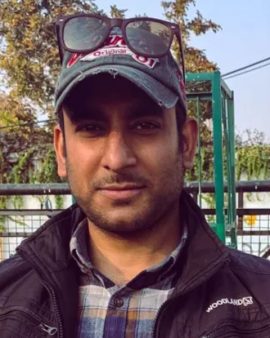
Irfan Mehraj - selected in the list of  - 2025

Irfan Mehraj

Irfan Mehraj: Courage, Conscience, and the Power of Truth

Irfan Mehraj is a journalist and human rights activist from Kashmir whose life and work reflect an unwavering commitment to truth, dignity, and public conscience. Writing for respected international and Indian platforms such as Deutsche Welle, The Indian Express, TRT World, The Wire, The Caravan, Himal Southasian, and New Arab, Mehraj has consistently focused on stories that demand moral attention. His journalism sheds light on the lived realities of Kashmir, particularly the social and human rights challenges confronting its Muslim community.

Born and raised in Kashmir, Mehraj’s early exposure to conflict and resilience shaped his purpose as a storyteller. He pursued a master’s degree in Mass Communication and Journalism from the University of Kashmir, choosing to use his education not merely as a profession, but as a means of service. As editor of TwoCircles.net and founding editor of Wande Magazine, he helped build platforms that amplified marginalized voices and encouraged thoughtful, independent journalism.

Mehraj’s dedication to principled reporting came at a personal cost. On 20 March 2023, he was arrested by India’s National Investigation Agency following questioning related to his association with the Jammu Kashmir Coalition of Civil Society (JKCCS), a respected organization known for documenting human rights concerns in the region. His detention became emblematic of the risks faced by journalists and human rights defenders working in contested spaces.

The response to Mehraj’s arrest was global and resolute. International human rights organizations, including Amnesty International, called for his immediate release, describing the case as part of a broader effort to silence independent voices in Kashmir. United Nations Special Rapporteurs, among them Mary Lawlor, expressed grave concern and urged Indian authorities to end the criminalization of human rights work. Political leaders, journalists’ bodies, and civil society groups echoed these calls, standing in solidarity with Mehraj.

Irfan Mehraj’s story is one of quiet courage. It reminds us that journalism rooted in integrity can endure even the harshest trials—and that the pursuit of truth, though costly, remains an act of profound hope.


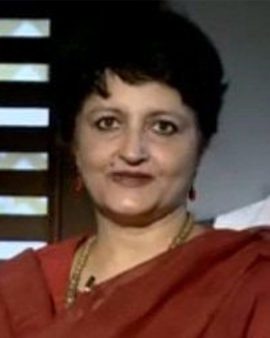
Seema Mustafa - selected in the list of  - 2025

Seema Mustafa

Seema Mustafa: Chronicler of Politics and Independent Voices in Indian Journalism

Seema Mustafa, born on 20 April 1955, has carved a unique place in Indian journalism as a fearless political commentator, editor, and media entrepreneur. Currently the Editor-in-Chief of The Citizen, the independent digital newspaper she founded in 2014, Mustafa also serves as the elected president of the Editors Guild of India, a role she assumed on 16 October 2020. Her career spans decades of incisive reporting, editorial leadership, and advocacy for press freedom, reflecting her enduring commitment to independent journalism in India.

Mustafa was born in Delhi into a family with deep roots in public service and political engagement. Her father, Syed Mustafa, was an officer in the Indian Army, while her mother hailed from the Kidwai family of Uttar Pradesh—a lineage closely associated with India’s freedom struggle. Seema’s maternal great-uncle, Rafi Ahmed Kidwai, was a noted freedom fighter and Congress politician, and her maternal grandmother, Anis Kidwai, later became a Rajya Sabha MP. Growing up in this milieu of civic responsibility, Mustafa absorbed the importance of public service, intellectual inquiry, and principled engagement.

Education played a foundational role in shaping her worldview. Mustafa graduated with a BA in Political Science from Lucknow University, a background that informed her sharp understanding of India’s political and social landscape.

Seema Mustafa began her career in journalism at The Pioneer, a Lucknow-based newspaper, before moving to The Patriot in 1979. Over the years, she contributed to leading Indian publications including The Telegraph, Indian Express, and Asian Age, where she became Political Editor and Delhi Bureau Chief in 1997. Her coverage of the Kargil War earned her the Prem Bhatia Award for Excellence in Political Reporting and Analysis in 1999, highlighting her ability to combine investigative rigor with accessible narrative.

Known for her forthrightness, Mustafa’s editorial voice has often challenged political orthodoxy. While at the Asian Age, she penned syndicated op-eds for newspapers like The Deccan Chronicle and Pakistan’s Dawn, exploring sensitive cross-border and domestic issues. Her critical stance on the Indo-US Nuclear Deal in 2008, which questioned the Congress-led government’s foreign policy, exemplified her fearless approach to political journalism, even amid controversy.

Following her tenure at the Asian Age, Mustafa served as Resident Editor for Covert, a left-leaning political magazine, and later joined The Sunday Guardian under M.J. Akbar. She also hosted Straight Talk with Seema Mustafa on NewsX, where she conducted in-depth interviews on national affairs. Her media career has consistently blended reporting, analysis, and public engagement, reflecting a rare versatility in Indian journalism.

In 2014, Mustafa founded The Citizen, an independent digital daily based in Delhi, emphasizing credibility, investigative depth, and independent commentary. Beyond editorial leadership, she serves as Director of the Centre for Policy Analysis, a left-leaning New Delhi-based think tank, continuing her engagement with public policy and research.

Her election as President of the Editors Guild of India in 2020 marked a recognition of her enduring contribution to press freedom and ethical journalism. In a media landscape often challenged by commercial pressures and political influence, Mustafa stands out as a champion of independent, principled reporting, inspiring a generation of journalists to pursue truth without compromise.


Muslim Mirror 100: The Most Influential Indian Muslims 2025

Copyright © 2024 | All rights reserved. | Website Designed & Maintained by Aash App Developers