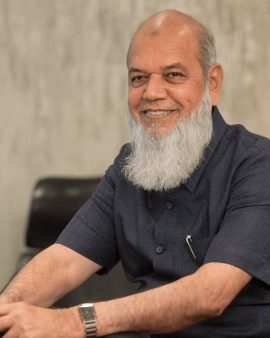
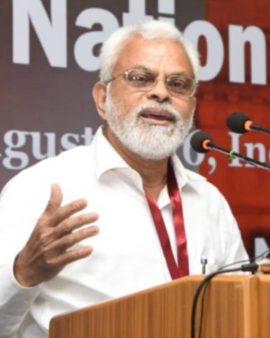
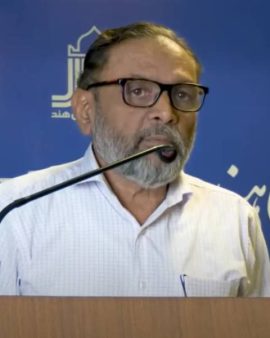
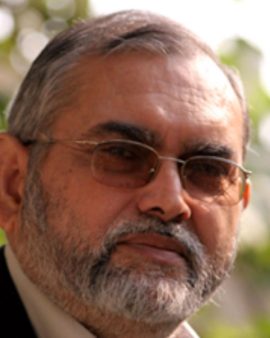
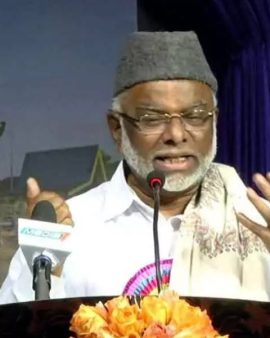
Dr. Javed Jamil: A Revolutionary Thinker Bridging Islam, Science, and Social Thought
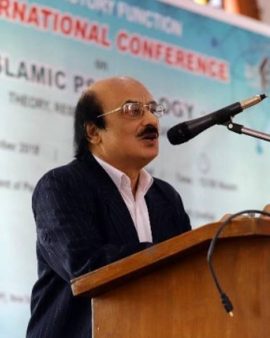
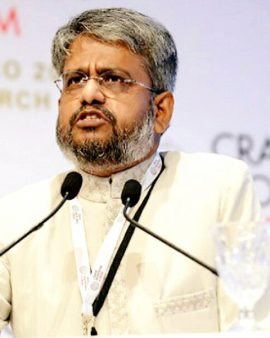
Dr. Javed Jamil (born in 1958) is a noted Indian scholar and thinker, widely recognized for his work in the fields of Islam, socio-economic analysis, Physics, Health Sciences and Urdu poetry. Born in Saharanpur, India, Jamil pursued his medical education at King George’s Medical University, Lucknow, and practiced as Consultant Physician for around 30 years. However, his intellectual pursuits extended far beyond medicine, leading him to explore and critique contemporary issues.
Dr. Jamil is best known for his pioneering concept of Applied Islamics, which deals with critical study of modern sciences and social issues in the light of Islam and applying Islamic principles for establishing Holistic Peace in the world. He has given several theories and concepts like Economic Fundamentalism, Peace Economics, Dynamic Paradigm of Health, Universal Theory of Relativity and Islamic Models of Family Welfare and Control of AIDS. In 1990s, his book, “Islam and Family Planning” paved the way for consensus among Indian Muslims on the issues related to Family Planning.
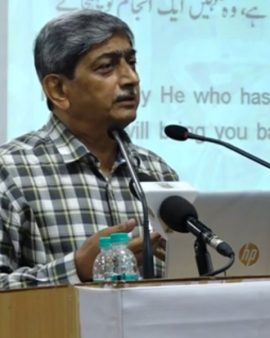
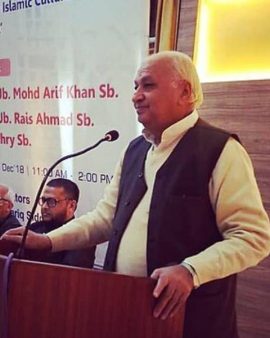
Dr. Jamil has been an active speaker on various platforms, frequently highlighting the weaknesses of the contemporary ideologies dominated by the forces of economics, urging a return to values that promote the well-being of individuals and communities.
Dr. Javed Jamil currently serves as the Chair in Islamic Studies and Research at Yenepoya University, Mangalore, Karnataka. He has written over two dozen books, more than 700 articles, and is also an Urdu poet with a collection of over 350 ghazals.
Some of his notable books include “A Systematic Study of the Holy Quran”, “The Devil of Economic Fundamentalism”, “Islam and Family Planning”, “Muslim Vision of Secular India: Destination and Roadmap”, “Muslims Most Civilised, Yet Not Enough”, “Economics First or Health First?”, “Rediscovering the Universe”, “Justice Imprisoned” and “Prevention and Management of Pandemics: Islamic Guidelines”.
Dr. Jamil’s poetry collections include Rahguzar (published by the Urdu Academy, Government of Uttar Pradesh) and Khirad Bhi Junoon Bhi (an e-book on Rekhta Foundation website).
If novelty of work, freshness of approach, depth of thoughts, ability to influence the world and capability of revolutionizing knowledge are the criteria of greatness, Dr Jamil should be seen as one of the revolutionary thinkers of the contemporary world.