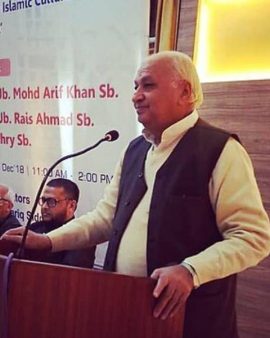
Imran Abbas Shaikh: Architect
Imran Abbas Shaikh (born in 1982) is a visionary architect based in Pune, Maharashtra, is a leading figure in the Indian architectural landscape. His work seamlessly blends modern design with cultural heritage, resulting in a portfolio that spans innovative urban projects and iconic cultural landmarks. Renowned for his distinctive approach, Imran has particularly redefined the design of mosques, incorporating facilities such as hospitals, museums, libraries, and community kitchens into these sacred spaces. His commitment to integrating functionality with tradition has set new standards in architecture and earned him widespread acclaim.
Imran’s journey from his roots in Pune to becoming a prominent architect is a testament to his dedication and creativity. His architectural firm, Cubix Architects, reflects his deep connection to his hometown, where his talents were nurtured. His passion for architecture was greatly influenced by his father, who instilled in him the belief that architecture is not just about creating structures but about crafting a future that brings positive change. This guidance became the driving force behind Imran’s relentless pursuit of excellence.
Imran’s educational journey began in Pune, where he demonstrated a keen interest in art and innovation from a young age. He honed his architectural skills at Bharati Vidyapeeth, consistently excelling throughout his studies. Beyond his formal education, Imran has made significant contributions as a guest lecturer, sharing his expertise with students and inspiring the next generation of architects.
One of his notable works is the ‘Muhammad Bin Abdullah Mosque’ in Dhannipur, Ayodhya, which is under construction. This mosque, spanning 4,500 square meters, will feature a hospital, community kitchen, library, and research center, and will be the first mosque in India with five minarets, symbolizing the five pillars of Islam.
Along with his architectural achievements, Imran is deeply committed to social causes through his nonprofit organization, the Human Embrace Foundation, which provides education to children from financially disadvantaged backgrounds. Imran Abbas Shaikh’s work exemplifies innovation, compassion, and a commitment to community empowerment, making him a role model for aspiring architects and youth alike.
Some of architect Imran’s finest works include:
1-KAUSAR BAUGH MASJID – PUNE, MAHARASHTRA
2-ISLAMIC SPIRITUAL CENTRE OF MAULANA SAJJAD NOMANI – NERAL, MAHARASHTRA
3-ISLAMIC SCHOOL AND INSTITUTIONAL CAMPUS – PHALTAN, MAHARASHTRA
4-ISLAMIC SCHOOL AND INSTITUTIONAL CAMPUS – NEPAL
5-MASJID MUHAMMAD BIN ABDULLAH INDO ISLIMIC CULTURAL – BABRI MASJID, UP AYODHYA
5-ISLAMIC SCHOOL AND INSTITUTIONAL CAMPUS – BANGLADESH