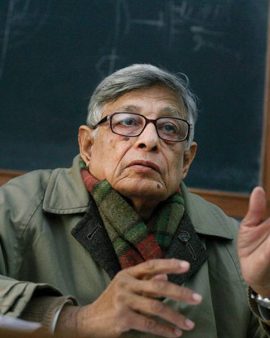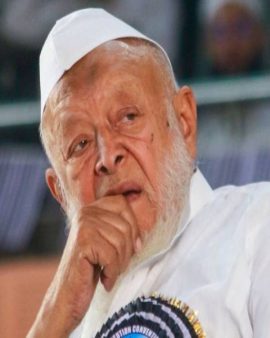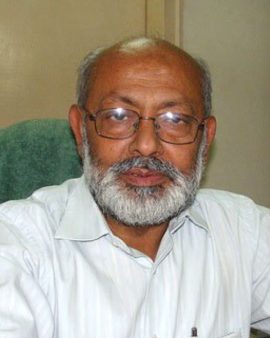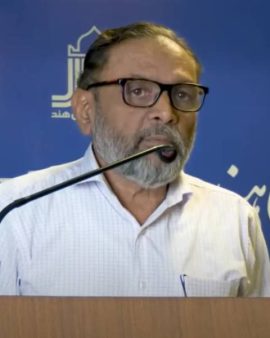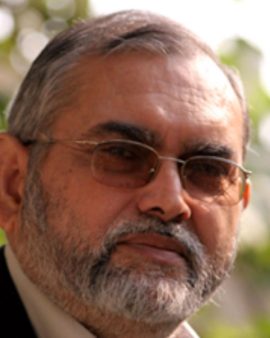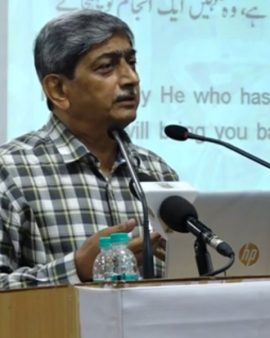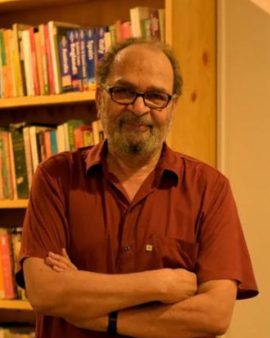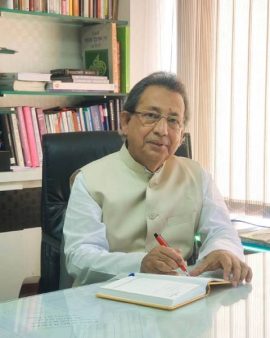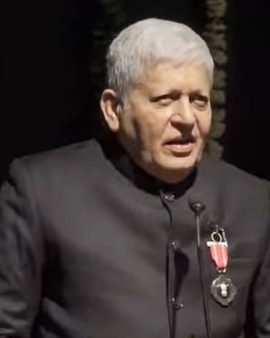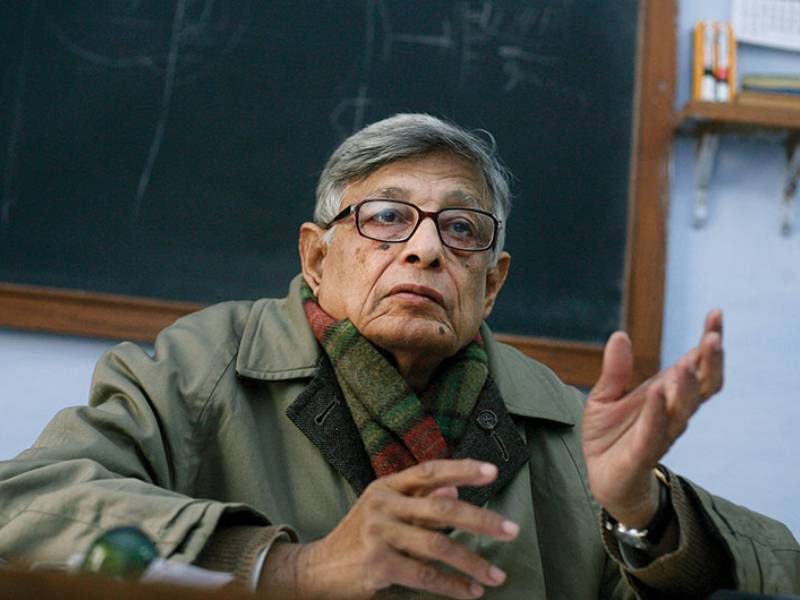
Irfan Habib: Historian/ Academic
Irfan Habib (born in 1931) is a distinguished Indian historian renowned for his extensive contributions to the study of medieval Indian history and his expertise in Marxist historiography. Born on August 10, 1931, in Vadodara, Gujarat, he hails from a scholarly family; his father, Mohammad Habib, was a prominent historian, and his mother, Sohaila Habib, was an accomplished academic. Irfan Habib pursued his education at Aligarh Muslim University (AMU), where he completed his BA and MA in history. He later earned his DPhil from the University of Oxford, further honing his academic prowess.
Habib’s scholarly work primarily focuses on the economic and social history of medieval India, with a particular emphasis on the Mughal period. His landmark book, The Agrarian System of Mughal India, published in 1963, is considered a seminal work in the field, offering a detailed analysis of the agricultural economy under Mughal rule. He has also authored and edited numerous volumes, including Medieval India: The Study of a Civilization, Essays in Indian History: Towards a Marxist Perception, and the multi-volume People’s History of India series.
A committed Marxist, Habib’s approach to history emphasizes the importance of economic structures, class relations, and the role of material conditions in shaping historical developments. His work has been influential in challenging and reinterpreting established narratives of Indian history, often critiquing colonial and nationalist historiographies.
Beyond his research, Irfan Habib has been a dedicated educator, serving as a professor of history at AMU for many years. He has also been actively involved in various intellectual and cultural debates in India, particularly regarding the secular and pluralistic nature of Indian society.
Irfan Habib’s contributions to historical scholarship have earned him widespread recognition, making him one of India’s most respected historians. His work continues to inspire and influence generations of historians and scholars.