Seema Mustafa: Chronicler of Politics and Independent Voices in Indian Journalism
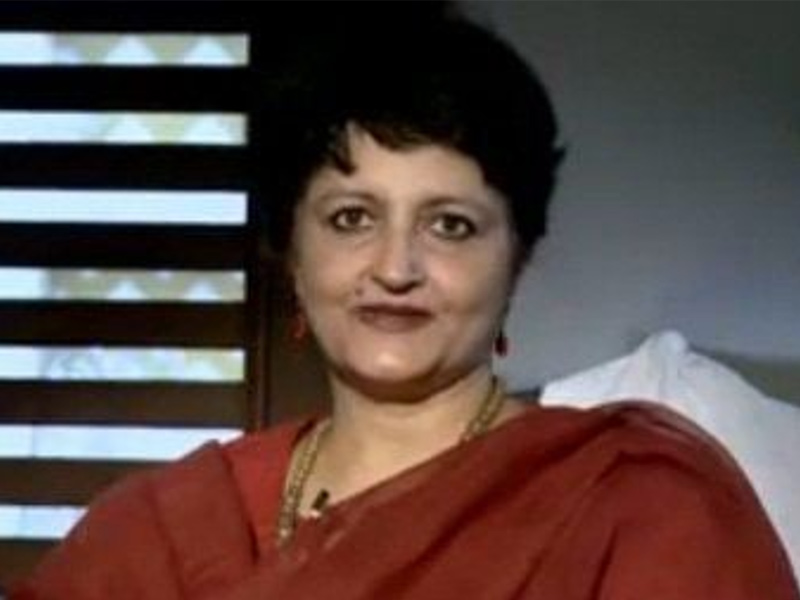
Seema Mustafa, born on 20 April 1955, has carved a unique place in Indian journalism as a fearless political commentator, editor, and media entrepreneur. Currently the Editor-in-Chief of The Citizen, the independent digital newspaper she founded in 2014, Mustafa also serves as the elected president of the Editors Guild of India, a role she assumed on 16 October 2020. Her career spans decades of incisive reporting, editorial leadership, and advocacy for press freedom, reflecting her enduring commitment to independent journalism in India.
Mustafa was born in Delhi into a family with deep roots in public service and political engagement. Her father, Syed Mustafa, was an officer in the Indian Army, while her mother hailed from the Kidwai family of Uttar Pradesh—a lineage closely associated with India’s freedom struggle. Seema’s maternal great-uncle, Rafi Ahmed Kidwai, was a noted freedom fighter and Congress politician, and her maternal grandmother, Anis Kidwai, later became a Rajya Sabha MP. Growing up in this milieu of civic responsibility, Mustafa absorbed the importance of public service, intellectual inquiry, and principled engagement.
Education played a foundational role in shaping her worldview. Mustafa graduated with a BA in Political Science from Lucknow University, a background that informed her sharp understanding of India’s political and social landscape.
Seema Mustafa began her career in journalism at The Pioneer, a Lucknow-based newspaper, before moving to The Patriot in 1979. Over the years, she contributed to leading Indian publications including The Telegraph, Indian Express, and Asian Age, where she became Political Editor and Delhi Bureau Chief in 1997. Her coverage of the Kargil War earned her the Prem Bhatia Award for Excellence in Political Reporting and Analysis in 1999, highlighting her ability to combine investigative rigor with accessible narrative.
Known for her forthrightness, Mustafa’s editorial voice has often challenged political orthodoxy. While at the Asian Age, she penned syndicated op-eds for newspapers like The Deccan Chronicle and Pakistan’s Dawn, exploring sensitive cross-border and domestic issues. Her critical stance on the Indo-US Nuclear Deal in 2008, which questioned the Congress-led government’s foreign policy, exemplified her fearless approach to political journalism, even amid controversy.
Following her tenure at the Asian Age, Mustafa served as Resident Editor for Covert, a left-leaning political magazine, and later joined The Sunday Guardian under M.J. Akbar. She also hosted Straight Talk with Seema Mustafa on NewsX, where she conducted in-depth interviews on national affairs. Her media career has consistently blended reporting, analysis, and public engagement, reflecting a rare versatility in Indian journalism.
In 2014, Mustafa founded The Citizen, an independent digital daily based in Delhi, emphasizing credibility, investigative depth, and independent commentary. Beyond editorial leadership, she serves as Director of the Centre for Policy Analysis, a left-leaning New Delhi-based think tank, continuing her engagement with public policy and research.
Her election as President of the Editors Guild of India in 2020 marked a recognition of her enduring contribution to press freedom and ethical journalism. In a media landscape often challenged by commercial pressures and political influence, Mustafa stands out as a champion of independent, principled reporting, inspiring a generation of journalists to pursue truth without compromise.